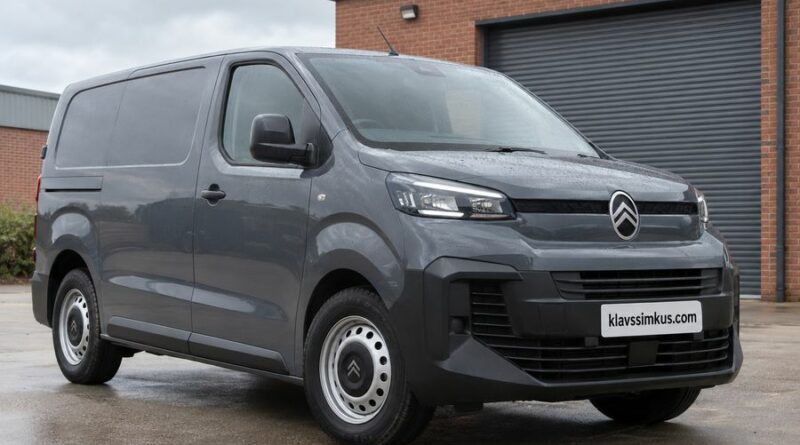
Citroën Dispatch Problems and Used Van Buying Guide
If I’m checking a used Citroën Dispatch, I find out what it carried, where it worked and why the operator is selling it. That tells me where to spend time. A van on short delivery rounds can have different diesel emissions and door wear concerns from one that spent its working life on the motorway. An ë-Dispatch needs a charging and battery check as part of the viewing. The checks below will help you separate Citroën Dispatch problems that need diagnosis from routine work you can price before buying.
Identify the Dispatch engine and body first
This guide focuses on the medium Dispatch generation introduced in 2016. Citroën’s UK launch information covers early 1.6 and 2.0 BlueHDi diesels. The 2019 update introduced the 1.5 BlueHDi to the range alongside 2.0 options. Gearboxes, lengths and body configurations changed over time. Note the engine capacity, build date and gearbox for the individual van. The commercial names and power badges on different years can be easy to confuse.
The Dispatch shares its basic platform with the Peugeot Expert and Toyota Proace, among others. If you need a smaller van, my Citroën Berlingo buying guide covers the compact model and its passenger variants. That helps when comparing used vans, although service schedules, campaign coverage and supported parts should be confirmed against the manufacturer and vehicle identification number (VIN). If you’re cross-shopping, my Toyota Proace buying guide covers related diesel and electric checks on the Toyota.
Diesel particulate filter, EGR and AdBlue warnings
Ask about the last job the van was doing. Repeated short cold trips can make it harder for a diesel particulate filter (DPF) to complete regeneration. Warning lights or reduced power can also come from faults elsewhere. I’d have a workshop read the fault codes and the available data, including exhaust pressure readings and when regeneration last completed. Ask whether the engine reaches the right operating temperature and whether a sensor, exhaust leak or other fault is preventing regeneration. A van that has repeatedly needed a warning cleared merits a proper diagnosis before money changes hands.
For an AdBlue or emissions message, take down the exact warning and check whether there’s a countdown to a no-start condition. AdBlue level, a tank or pump fault, wiring and other parts of the selective catalytic reduction system need different tests. Stellantis has a support scheme for certain urea tank issues on eligible diesels built between January 2014 and August 2020, with conditions linked to age, mileage and the authorised network. I’d ask Citroën for a written VIN-specific decision if the seller says the tank will be covered. If the emissions equipment appears modified, have its condition and the implications checked with a competent workshop.
1.5 BlueHDi camshaft chain and timing history
Ask the seller to leave the engine cold so you can listen to the first start. A persistent rattle, a warning or unexplained timing work in the records all deserve a closer look. The 1.5 BlueHDi camshaft chain issue is specific to applicable engines and is a separate question from routine timing-belt maintenance. Citroën’s support information describes coverage for camshaft chain issues on eligible earlier 1.5 engines of up to 10 years or 150,000 miles, subject to criteria. Ask a dealer to check the VIN for outstanding action and confirm what was done if a campaign is shown as complete.
For any diesel Dispatch, ask for the manufacturer’s timing and oil-service schedules for that exact engine. Match each relevant invoice to the van’s VIN or registration, the date and mileage. Check which parts the invoice actually lists. If there’s a fuel smell, visible leakage or an uneven idle, have it investigated. I wouldn’t guess from a smell alone whether the quote should cover an injector, pipe or seal. For a suspected fuel leak, keep the van off the road until the source has been checked.
Manual clutch and automatic gearbox checks
On a manual, start with first and reverse from cold. I’d then check how the van pulls away several times and whether the engine speed rises without a corresponding increase in road speed under moderate acceleration. Any judder, noise or awkward shift should be reproduced and traced. A clutch, flywheel, linkage and gearbox all have different repair implications, and the configuration depends on the variant.
For a diesel automatic, try Drive and Reverse, then look for consistent shifts on a safe drive with the van warmed up. Ask to see a workshop report for any gearbox warning, harsh engagement or delay. A road test gives useful evidence alongside the technician’s fault readings and fluid or leak checks. I’d ask who carried out any earlier transmission work and whether there is a repair warranty in writing.
ë-Dispatch battery, heater and charging checks
Citroën’s UK electric Dispatch launch information describes 50 kWh and 75 kWh battery versions. Check which battery is fitted and the van’s specific AC and DC charging capability. For a used electric Dispatch, ask for the traction battery’s remaining warranty and a dated diagnostic report that identifies the vehicle and how battery health was measured. An indicated range on the dashboard depends on recent use and conditions. I’d estimate route mileage with the real load, winter temperatures, heating and charging stops in mind.
Ask to see the van start an AC charge if the seller has a suitable charger. If rapid charging is central to your work, arrange a demonstration or obtain evidence it works before buying. Check the cable, charge port, flap, warning lights, cabin heating and demisting. A fault could involve the charge point, cable, 12-volt supply, charge inlet or the van’s internal equipment. If an EV warning is present or there are signs of impact underneath, I’d involve a workshop qualified to assess high-voltage vehicles.
Sliding doors, load bay and working payload
Try the side and rear doors repeatedly. Check latches, locks, rollers, hinges and the fit of the seals. On a van with powered doors, operate them from the controls you’ll use in practice. Dents around the runners, water inside the bay and doors that need lifting to close can be signs of wear or previous impact. Lift any accessible mats or floor covers with permission and look at the bulkhead and load restraints. A tidy lining can hide corrosion, holes or damaged tie-down points.
I always check the plate for the limits on that specific van. Roof racks, lining, tools, tow equipment and a crew conversion can all affect available payload. If it will work close to its limit, weigh it as equipped and allow for the people and cargo you’ll carry. Use the manufacturer’s limits for axle loads and towing, and the GOV.UK van guidance for weight and loading rules. Look for tyre wear, steering pull and noises over bumps. Ask for evidence of an alignment check if repairs or unusual wear point to a suspension issue.
Check the van against your working day
I measure the load opening as well as the floor. If you carry sheet material, bulky appliances or bikes, check whether they still fit with the bulkhead in place and the doors closed. On a crew van, inspect how the second row and head restraints are mounted and confirm the seating details with the paperwork. Ask for documentation for any conversion, added seats, towbar or fixed racking. For a conversion with wiring or a separate leisure battery, I’d want the installer’s details and a diagram before valuing the work.
Bring the address of any regular restricted route to your checks. Confirm a diesel van’s eligibility with the official checker for the zone and the registration, because the rules and charges vary. I’d also measure the height with the rack fitted if you use a car park or loading area with a low barrier. For electric vans, look at where you can charge while working and what it would cost if the usual site is unavailable.
Paperwork and repair costs before you commit
Compare the VIN, invoices and recorded mileage against the MOT history. Look for repeated advisories and mileage gaps. Check the official recall service and ask Citroën about open campaigns for the van. Test all keys, camera or sensors if fitted, blower speeds and lights. Check the condition and load rating of the tyres. For a fleet van, ask for the operator’s maintenance printout if the invoices were held centrally.
- Ask what diagnosis is included and whether the garage has priced labour, parts and VAT. Compare quotes for the same work.
- Get the cause of emissions, fuel and timing faults established before budgeting a repair. Ask if support applies to that VIN and who can carry out the work.
- Ask a body repairer to price damaged doors or mounting points after seeing the van. Check parts supply and how long it will be off the road.
- Confirm the gross purchase price and allow for immediate maintenance, repairs, vehicle downtime and any charging installation you need for the business.
I’d buy the van whose condition, history and running costs fit the work. If a candidate is far away or the seller can’t explain a warning, an independent vehicle inspection can help you make an informed decision. Share the advert, intended load and any symptoms before the visit so checks can be targeted and workshop-only tests identified.