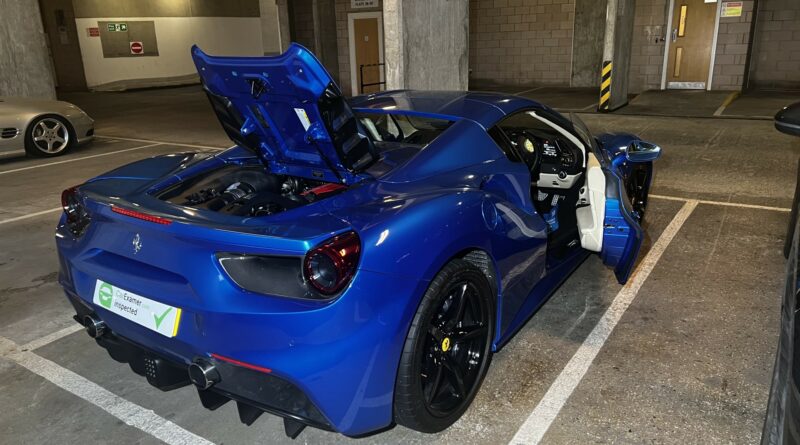
How to Buy a Supercar in the UK: Costs, Checks and Expert Buying Tips
Buying a supercar is an exciting prospect. Whether you dream of owning a Ferrari, Lamborghini, McLaren or Porsche, there is something special about driving a car built with performance as its main priority.
However, buying a supercar is very different from buying an ordinary used car. The purchase price is only the beginning. Maintenance, insurance, depreciation and unexpected repairs can quickly turn an exciting purchase into an expensive mistake.
The supercar market also attracts speculation. Certain limited-production models command substantial premiums, while others lose value much faster than buyers expect.
As a professional car inspector, my advice is to approach a supercar purchase with the same attention to detail you would apply to any major investment, without assuming the car itself is an investment.
A beautiful exterior, low mileage and prestigious badge do not guarantee good mechanical condition.
This guide explains how to buy a supercar in the UK, what to check before paying and how to avoid some of the most expensive mistakes.
1. Set a Realistic Supercar Budget
Before choosing a model, establish how much you can comfortably spend.
Don’t base your budget entirely on the advertised purchase price.
Supercars can be expensive to maintain even when they are rarely driven. Replacement tyres, specialist servicing and certain mechanical repairs can cost considerably more than those for conventional cars.
Your ownership budget should include:
- Purchase price and any finance interest
- Comprehensive insurance
- Vehicle Excise Duty
- Routine servicing
- Tyres and brakes
- Extended warranty, where appropriate
- Secure storage
- Unexpected repairs
- Depreciation
I recommend keeping a separate maintenance reserve rather than spending every available pound on the purchase.
The amount depends on the vehicle, but several thousand pounds may be sensible for an older, complex supercar. Some major repairs can cost considerably more.
2. Research the Supercar Models That Suit You
Not every supercar offers the same ownership experience.
A Ferrari 488 GTB, Lamborghini Huracán, McLaren 570S and Porsche 911 Turbo S are all high-performance cars, but they differ in driving character, practicality and maintenance requirements.
Consider how you intend to use the vehicle.
Will it be a weekend car, an occasional track-day vehicle or something you want to drive regularly?
Research:
- Engine and transmission design
- Reliability and known model-specific faults
- Service intervals
- Specialist repair availability
- Ground clearance
- Cabin comfort and visibility
- Luggage capacity
- Insurance costs
- Resale demand
Some buyers focus entirely on acceleration figures and engine power.
However, a supercar that is uncomfortable on your regular journeys or difficult to manoeuvre into your garage may not be the right choice.
3. Understand Supercar Waiting Lists and Manufacturer Allocations
Buying a new supercar is not always as simple as visiting a showroom and placing an order.
Some limited-production models are allocated to selected customers rather than offered freely to everyone.
Manufacturers and dealerships may consider an existing customer’s purchasing history, relationship with the brand and other commercial factors.
In practice, established customers may receive priority for particularly desirable models.
However, there is no universal rule that every manufacturer requires buyers to purchase an entry-level supercar before ordering a more expensive one.
Availability depends on the brand, model and dealership.
If you want a limited-edition Ferrari or another highly sought-after vehicle, ask about the allocation process before making financial commitments.
Also remember that waiting lists and market premiums can change.
4. Don’t Assume Rare Supercars Always Increase in Value
One of the biggest mistakes buyers make is treating every limited-production supercar as a guaranteed investment.
Certain rare models have appreciated substantially, but that doesn’t mean the next special edition will follow the same pattern.
Prices can be influenced by:
- Production numbers
- Manufacturer reputation
- Specification and colour
- Mileage
- Service history
- Originality
- Accident history
- Market speculation
- Economic conditions
- Collector demand
A limited-production model may retain its value better than a mass-produced alternative, but there is no guarantee.
Some buyers also pay inflated prices during periods of strong demand and then suffer substantial losses when the market cools.
Buy a supercar because you want to own and enjoy it. Treat any future appreciation as a possibility, not a certainty.
5. Should You Buy a New or Used Supercar?
A new supercar offers the latest technology, manufacturer warranty and the opportunity to choose your preferred specification.
However, it may also come with a long waiting list and significant depreciation.
A used supercar can offer better value, particularly if the first owner has already absorbed much of the initial depreciation.
For cash buyers, a nearly new vehicle with low mileage can be attractive.
However, buying a six-month-old or one-year-old supercar is not automatically the best financial decision.
Some nearly new examples are priced above their original list price because demand exceeds supply.
Others may have suffered heavy depreciation.
Compare actual market prices rather than relying on age alone.
| New supercar | Used supercar |
|---|---|
| Manufacturer warranty | Potentially lower purchase price |
| Latest technology | Wider choice of discontinued models |
| Choice of specification | More opportunity to negotiate |
| Possible waiting list | Condition and history require careful checking |
| Potential early depreciation | Possible expensive maintenance |
6. Choose the Right Seller
You can buy a supercar through an official manufacturer dealership, an independent specialist, a private seller or an auction.
Each option has advantages and risks.
Official dealerships may offer manufacturer-backed approved-used programmes, preparation standards and warranty options.
Independent specialists may have excellent knowledge of particular brands and access to desirable vehicles.
Private sellers sometimes offer more competitive prices, but consumer protections are generally more limited.
Auctions can provide access to rare cars, although buyers must understand the fees, conditions and inspection opportunities.
Never assume that an expensive showroom or well-known dealer guarantees a fault-free vehicle.
The car’s actual condition matters more than the reputation of the building in which it is displayed.
7. Check the Service History Carefully
Service history is particularly important when buying a used supercar.
A vehicle may have covered very few miles but still require servicing based on time rather than distance.
Ask for evidence of:
- Scheduled servicing
- Engine oil and filter changes
- Brake fluid replacement
- Gearbox maintenance where specified
- Cooling system work
- Manufacturer recalls
- Previous repairs
- Warranty claims
- Specialist diagnostic investigations
Check that the work was completed at the correct intervals.
An incomplete history may affect both the car’s mechanical condition and future resale value.
Also confirm whether the vehicle has been serviced by a recognised specialist familiar with that particular model.
8. Arrange a Professional Supercar Inspection
This is one of the most important steps when buying a used supercar.
Even vehicles advertised as immaculate can have expensive hidden problems.
A professional vehicle inspection can help identify faults and provide a clearer picture of the vehicle’s condition before you commit to the purchase.
Areas worth checking include:
- Engine operation and visible leaks
- Gearbox and clutch behaviour
- Suspension and steering
- Brake condition
- Cooling system
- Electrical systems
- Diagnostic fault codes
- Bodywork repairs
- Structural damage
- Tyres and wheel condition
- Signs of poor maintenance
For certain supercars, a general inspection may need to be supplemented by model-specific specialist diagnostics.
For example, some vehicles require particular diagnostic equipment to assess transmission systems, suspension components or manufacturer-specific electronic faults.
An inspection cannot guarantee future reliability, but it can substantially improve your understanding of what you are buying.
9. Check for Previous Accident Damage and Poor Repairs
Supercars can be expensive to repair following even relatively minor accidents.
Carbon-fibre components, aluminium structures and complex body panels may require specialist repair methods.
During a physical inspection, pay attention to:
- Uneven panel gaps
- Paint colour differences
- Excessive paint thickness
- Overspray
- Poorly aligned bumpers
- Damaged undertrays
- Scraped front splitters
- Evidence of structural repairs
- Non-original body panels
Some repairs are purely cosmetic, while others may affect the vehicle’s structure or safety.
A repaired car is not necessarily a bad purchase, but the quality of the work, extent of damage and effect on value must be understood.
Don’t accept a seller’s explanation without supporting evidence.
10. Pay Attention to Brakes, Tyres and Suspension
These components can be particularly expensive on high-performance vehicles.
Carbon-ceramic brake discs, where fitted, may cost thousands of pounds to replace.
They require appropriate inspection because their condition cannot always be judged using the same methods as conventional steel discs.
Tyres are another important consideration.
Check the correct manufacturer-approved specification, tread depth, age and evidence of uneven wear.
Also inspect for:
- Suspension leaks
- Worn bushes
- Damaged wheels
- Incorrect tyre combinations
- Steering vibrations
- Brake judder
- Unusual noises
A car may look attractive at the advertised price but require substantial expenditure immediately after purchase.
11. Take the Supercar for a Proper Test Drive
A road test can reveal problems that are difficult to identify while the vehicle is stationary.
Before driving, ensure appropriate insurance is in place and that the seller permits the test.
Pay attention to:
- Cold-start behaviour
- Engine warning lights
- Idle quality
- Gear changes
- Clutch engagement
- Steering response
- Braking performance
- Suspension noises
- Engine temperature
- Unusual vibrations
Avoid unnecessary high-speed driving on public roads.
You do not need to approach the car’s performance limits to identify many common mechanical problems.
A seller who refuses any reasonable road test or independent inspection should prompt additional caution.
12. Investigate Low Mileage and Long Storage Periods
Low mileage is often desirable in the supercar market, but it does not automatically mean a vehicle is in excellent condition.
Cars that spend long periods unused can develop problems.
These may include:
- Ageing tyres
- Battery deterioration
- Fluid leaks
- Brake corrosion
- Dried seals
- Fuel-related issues
- Faults caused by inadequate maintenance
A supercar with 4,000 miles and several years of neglected servicing may be a worse purchase than one with 20,000 miles and a documented maintenance history.
From an inspection perspective, condition and maintenance matter more than the odometer reading alone.
13. Check the Vehicle’s Identity and History
Before paying a deposit, verify the vehicle’s identity and legal status.
Check:
- V5C registration certificate
- Vehicle identification number (VIN)
- Registration details
- MOT history
- Outstanding finance
- Theft records
- Insurance write-off history
- Import status
- Recorded mileage
The official GOV.UK used vehicle checking guidance explains how to compare DVLA records, check MOT information and verify vehicle identity.
For a valuable supercar, a comprehensive commercial vehicle history check is also worthwhile.
Remember that a clear history report does not prove the car has never been damaged. Not every repair or accident appears in insurance databases.
14. Get Insurance Quotes Before Paying a Deposit
Supercar insurance can be expensive, particularly for younger drivers or owners without experience of high-performance vehicles.
Premiums depend on factors including:
- Driver age and experience
- Vehicle value
- Annual mileage
- Storage arrangements
- Location
- Security systems
- Previous claims
- Intended usage
Some insurers may require secure garaging, approved tracking devices or specific mileage limits.
Check whether track-day use is excluded.
If you plan to take the car abroad, confirm the extent of your insurance cover.
Obtaining quotes before purchase can prevent an unpleasant surprise.
15. Understand Supercar Finance and Ownership Costs
Supercars can be purchased outright or financed through arrangements such as hire purchase and personal contract purchase, depending on eligibility and the lender.
If financing, don’t focus only on the monthly payment.
Check the deposit, APR, total amount payable, mileage restrictions and any final balloon payment.
For an expensive performance vehicle, depreciation can create negative equity.
You may owe more than the car is worth if market values fall sharply.
Also compare warranty options carefully.
An extended warranty may be valuable, but exclusions, claim limits and servicing requirements can significantly affect the protection offered.
16. Negotiate Only After Checking the Car
Once you’ve identified the right vehicle, avoid becoming emotionally attached before completing your checks.
Supercars are exciting, and that excitement can make buyers overlook problems they would never accept on an ordinary car.
Use evidence to support your negotiation.
Relevant factors include:
- Comparable market prices
- Service history gaps
- Tyre condition
- Brake wear
- Upcoming servicing
- Accident repairs
- Diagnostic findings
- Warranty coverage
For example, if the car requires expensive brake work and a major service, obtain realistic specialist quotations before agreeing a price.
Don’t automatically expect every seller to reduce the asking price.
However, be prepared to walk away if the condition doesn’t justify the cost.
17. Understand Your Rights When Buying a Supercar
In the UK, your rights depend partly on whether you buy from a business or a private individual.
When purchasing from a dealer, the Consumer Rights Act 2015 generally requires the vehicle to be of satisfactory quality, fit for purpose and as described, taking account of relevant circumstances.
Where a qualifying fault exists, remedies may include rejection, repair or a price reduction, depending on the facts and timing.
Private purchases generally offer less protection.
Auction purchases can also involve different terms and legal arrangements.
The Motor Ombudsman provides useful guidance on the Consumer Rights Act and vehicle purchases.
Do not assume that buying a luxury vehicle removes your statutory consumer rights.
Equally, don’t assume every mechanical problem arising after purchase automatically entitles you to a refund.
18. Complete the Purchase Safely
Before transferring a substantial sum of money, make sure the transaction is properly documented.
Confirm:
- Seller’s identity and authority to sell
- Agreed purchase price
- Deposit conditions
- Finance settlement arrangements
- Included accessories
- Warranty terms
- Vehicle identification details
- Delivery and collection arrangements
Use a secure, traceable payment method.
For large bank transfers, independently verify the recipient’s bank details using a trusted telephone number.
Once ownership is transferred, ensure the DVLA keeper details are updated, arrange insurance and tax the vehicle before driving it.
If you are considering a performance SUV for everyday use, my Lamborghini Urus used buying guide covers carbon-ceramic brake condition, suspension differences and charging checks on the SE.
For a front-engined Ferrari with a choice of gearbox, my Ferrari 599 buying guide explains the checks I would make on the F1 system, brake condition and any car advertised as a factory manual.