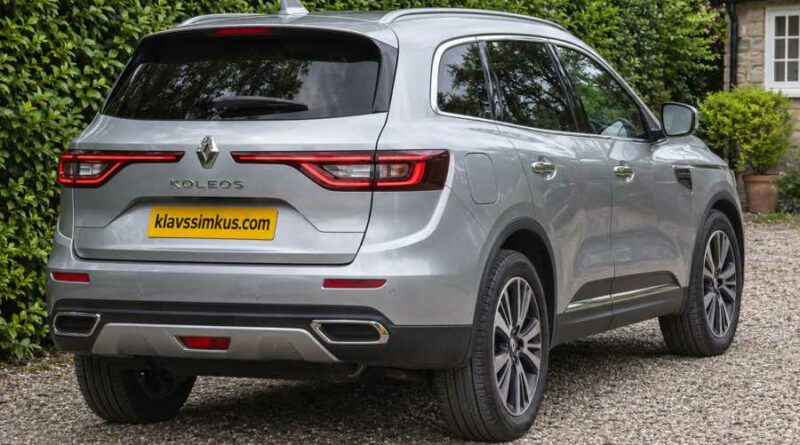
Renault Koleos Problems and Used SUV Buying Guide
When I check a used Renault Koleos, I want to see how the gearbox behaves after the car has warmed up and what the service invoices say about previous diesel or transmission work. Those are two of the most important checks if you are researching Renault Koleos problems. I would also make time to try the parking brake, check the tyres across both axles and test the air conditioning. A large SUV can feel comfortable on a quick drive while still leaving you with expensive questions to resolve.
The later UK Koleos is a spacious five-seater. If you need seven seats, check this early and compare another model. The reasons I would buy a Koleos are its useful rear space, comfortable driving position and, on the right version, four-wheel drive. I would make the final decision on how the individual car drives and what I can verify about its maintenance.
Know which diesel and transmission you are buying
The 2017 Renault UK brochure shows the 1.6-litre dCi 130 and 2.0-litre dCi 175. It lists the 175 with four-wheel drive and either a manual gearbox or an X-Tronic automatic. Renault’s 2019 UK brochure describes the later Blue dCi 150 X-Tronic and Blue dCi 190 X-Tronic, with All Mode 4×4-i on the latter. An advert that says automatic or simply diesel gives me too little information to assess the car or ask for the right maintenance schedule.
I confirm the registration, engine and gearbox with the seller and compare them with the car and paperwork at the viewing. I would do this before travelling if four-wheel drive is important. If you plan to tow, check the limits for the exact vehicle and inspect the towbar installation, electrics and associated records. A broad capacity figure from a used-car advert does not tell you what your particular combination of car and trailer can legally carry.
X-Tronic behaviour cold and warm
The X-Tronic is a continuously variable transmission. Under acceleration the engine can sit at a steady speed while the car gathers pace, so it feels different from a conventional automatic. I start the drive with gentle forward and reverse manoeuvres, move on to ordinary town speeds and then try steady acceleration when conditions permit. Afterwards I repeat the parking and pull-away checks with the car warm. This helps me understand whether a sound or pause happens again under the same conditions.
I would follow up a recurring shudder, an unexpected loss of drive or a warning before agreeing to buy. I write down when it happened and ask a specialist to reproduce it. An invoice for a gearbox repair should show what the garage found and what changed. Ask for the VIN-specific maintenance instructions and compare them with any fluid service receipts. Check that the invoice names the gearbox fluid or specification where it was changed.
If you are looking at a manual, try the full gear selection and check for clutch slip or repeated judder under normal use. I also ask about past towing. There may be useful evidence in the invoices even if the current owner has never towed. A rattle or difficult shift can have several causes, so I ask for fault confirmation before including the cost of a clutch or gearbox in my budget.
Diesel emissions and engine checks
I ask the seller to leave the engine cold until I arrive. I watch the dash, listen for an even idle and check whether hesitation or smoke persists as the engine warms. I read the service history for recurring work on exhaust sensors, the DPF and emissions equipment. On a Blue dCi I would also ask about AdBlue warnings and any recent work on the system. A code or a dashboard message gives the technician a starting point for testing.
I ask about the journeys the car has done over the last year. A large diesel used for a string of short trips has a different operating history from one doing regular longer journeys. Check the paperwork for repeated forced regenerations and any recorded reason for them. If a warning is present during the viewing, ask for the written diagnosis and leave time to repeat the drive after the repair. I would want that evidence before accepting a seller’s suggestion that another motorway run will clear it.
- Request the service records with dates and mileages and match them with the MOT history.
- Ask whether any fault warning has returned after a repair or software update.
- Get the recommended service intervals for the precise engine from Renault or a competent specialist.
- Raise unexplained oil or coolant loss with a garage before you rely on the car for long trips.
Four-wheel drive, suspension and parking brake
On a four-wheel-drive Koleos, I check the condition and specification of all four tyres. Pay attention to uneven wear, replacement tyres with very different tread depths and a recurring tyre issue in the MOT history. Use the handbook or ask Renault what the individual system requires. I check the visible underside from a safe position and ask about use on rough ground if there are impact marks. I would follow the handbook for any check of the selectable driving modes.
During a normal road test I listen for a repeatable knock and try to establish when it occurs. A loose jack or load floor can sound like rear suspension from the driver’s seat. If the steering pulls persistently on a suitably level road and the tyre wear looks uneven, I want the alignment and relevant suspension parts checked together. Replacing tyres alone may leave the original cause unresolved.
Where there is an electronic parking brake, I test it while stationary with my foot on the brake pedal. I look for consistent application and release and check for warnings. If the seller describes an intermittent fault with the brake holding, I would wait for an assessment before the road test. Brake issues need a clear account of what has been checked and, when relevant, what work is needed before the car returns to use.
R-Link 2, climate control and family practicality
Give the screen time to start, then test the audio, steering-wheel buttons, camera and parking sensors if fitted. Try a second start once the car is warm if the seller agrees. I ask whether previous screen or camera faults were fixed by a repair or just cleared after a restart. I also check that both keys work, that the tailgate opens smoothly and that the rear seat releases work as intended.
With the climate control I test the air temperature at the vents and try different fan speeds. If it blows warm when set to cool, ask a garage to check whether the system has lost refrigerant and why. I would want more evidence before accepting a top-up as the repair. When the car will mostly carry the family, bring the actual child seats or luggage if practical and try the space with the front seats in their usual positions. Check under the boot floor for damp or marks that are worth asking about.
Before the drive I also test the driver’s seat adjustments and set the mirrors for the person who will use the car. Try the steering at low speed in a normal parking space and check whether the camera view is clear in daylight. If you park beside a wall or need to carry items with the rear seats folded, try the tailgate and load space in a similar setting. I would do this before paying extra for a larger SUV.
What I would budget before buying
I start with MOT records, recalls and the outstanding jobs I can describe accurately. The GOV.UK MOT history helps me confirm whether advisories and mileage records are consistent. I use the official recall checker and ask Renault to confirm the status against the VIN when appropriate. If the seller says a previous advisory has been dealt with, ask for the invoice and check whether the repair covers the part of the car you are concerned about.
For repair prices I want a written quote covering the part, labour, VAT and any diagnostic charges. A known service item can usually be budgeted at the viewing. A transmission warning that nobody has assessed is much more difficult to price. Ask how soon a garage can do the work, particularly if the car will be your only way to get to work. If the seller offers to repair a fault, agree what will be done and when you can test it again.
Which used Koleos would I choose?
I would buy on the strength of the car’s maintenance records, how the transmission responds cold and warm, and whether the equipment actually fits the journeys I need. I would compare a smaller SUV if the Koleos is bigger than you need. My used Renault Kadjar buying guide covers an older petrol or diesel alternative. My Renault Austral buying guide is useful if you want to compare a newer hybrid. If a Koleos makes your shortlist, a vehicle inspection can help you weigh its condition and records before committing to the purchase.