Run-Flat Tyres Explained: Identification, Limits and Repairs
Run-flat tyres are designed to provide limited mobility after a loss of pressure, subject to the tyre and vehicle manufacturer’s instructions. They are not puncture-proof, and a pressure warning still needs prompt attention. I would confirm the exact tyres fitted, the vehicle’s requirements and the warning system before relying on any advertised run-flat capability.
The important buying questions are practical: are the correct tyres installed, is the pressure-monitoring system working, and is there evidence of pressure loss or previous repairs? A tyre that still appears upright may have an unresolved problem. Do not treat its shape or a comfortable road test as proof of correct pressure or internal condition.
How self-supporting run-flat tyres work
Michelin’s run-flat explanation describes reinforced sidewalls that help support the vehicle after pressure loss. This provides a limited opportunity to reach assistance under specified conditions. It does not make the tyre immune to cuts, impact damage or the consequences of continuing beyond its permitted operating limits.
The support system changes what happens during pressure loss, but ordinary tyre care remains necessary. Confirm pressures using the vehicle’s information for the load and follow the handbook. A run-flat designation is not permission to ignore tread wear, visible damage, recurring pressure loss or a warning that has not been investigated.
Identify the tyre using its actual markings
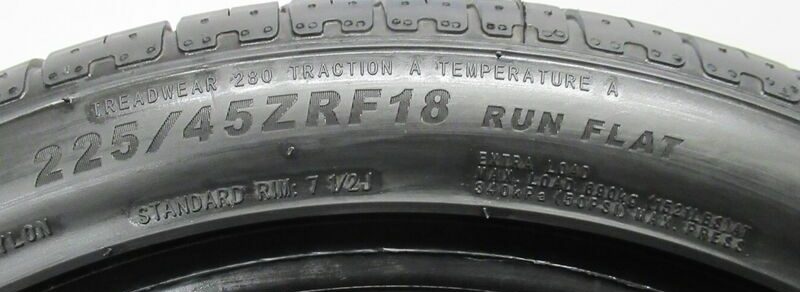
Read the complete sidewall information and confirm the tyre model with the manufacturer where necessary. Michelin identifies its run-flat products using ZP or EMT markings, while Continental uses SSR for its self-supporting technology. These examples help direct the enquiry; they are not a complete decoding guide for every tyre brand.
Continental distinguishes reinforced or XL tyres from run-flat capability. Extra-load wording alone is insufficient. Do not assume that a premium badge on the car, a large wheel or an old invoice establishes what is currently fitted. Check each wheel position, particularly on a used vehicle with replacement tyres.
Do not confuse self-sealing tyres with run-flat tyres
Continental’s ContiSeal technology uses a sealing layer for certain tread punctures. Its SSR run-flat system provides self-supporting capability after pressure loss. They address different situations. A self-sealing description should not be used as evidence that the tyre can carry the car without inflation pressure.
Ask exactly which technology is fitted and obtain the correct guidance. Avoid broad claims such as “puncture-proof tyres” or “no need for assistance”. The consequence of damage depends on the tyre, the type of failure and its condition. If those details are uncertain, resolve them before deciding whether the vehicle can continue safely.
Understand the commonly quoted 50-mile limit
Michelin’s ZP guidance gives a maximum of 50 miles at 50 mph after pressure loss for the described application. It also states that driving should not continue if more than one tyre is punctured. Always follow the instructions applicable to the actual vehicle and tyres.
A maximum is not a guaranteed remaining journey. The manufacturer’s limits and conditions matter, including the damage and operating circumstances. Do not read a general online figure as permission to finish a long trip. If the tyre, handbook or warning instructions cannot be identified reliably, obtain professional assistance instead of guessing a safe distance.
Respond to a pressure warning promptly
Read the vehicle’s instructions and respond safely to the warning. Reduce risk rather than concentrating on reaching the maximum possible distance. If there is severe vibration, unstable behaviour or obvious damage, arrange appropriate assistance. Run-flat capability does not justify continuing with a vehicle that appears unsafe.
Record when the warning appeared and what happened afterwards. A tyre professional may need to understand the distance, speed, load and pressure-loss history when assessing the tyre. Be candid if these are unknown. Resetting a dashboard warning does not repair a puncture or establish that the tyre is suitable for continued use.
Check the tyre-pressure monitoring system
TyreSafe’s TPMS guidance explains the importance of pressure monitoring with run-flat tyres. Do not assume the car’s warning system works simply because no light is currently showing. Consult the handbook about normal warning behaviour and obtain diagnosis where faults or unexplained messages are present.
Pressure monitoring is an aid, not a replacement for routine pressure checks and tyre examination. Establish the correct reset or relearn procedure after relevant work. I would want any claimed repair supported by evidence rather than a seller’s assurance that the light only needs clearing. Avoid deliberately deflating a tyre as a casual viewing test.
Can a punctured run-flat tyre be repaired?
Repairability depends on the maker’s policy, the tyre and the findings after appropriate examination. Michelin’s guidance allows a single professional repair for eligible run-flat tyres under its stated conditions, excluding tyres whose sidewalls prohibit repair. That policy does not mean every punctured run-flat is repairable or that an external check is sufficient.
Continental’s repair guidance identifies structural compromise and run-flat damage among replacement concerns. Follow the relevant manufacturer’s policy and a competent tyre professional’s assessment. A puncture location, remaining tread or the fact that the tyre holds air again does not settle the whole repair decision.
TyreSafe explains that deflated running can permanently damage a run-flat’s structure and that such damage may be difficult to identify. Do not arrange a repair solely because it is cheaper, or rely on a previous owner’s claim that the tyre was driven only a short distance.
Avoid mixing tyre technologies without proper guidance
TyreSafe strongly recommends against mixing conventional and run-flat tyres on the same vehicle. Confirm the manufacturer-approved arrangement and inspect all fitted tyres. Matching wheel diameter is only one requirement; load, speed, size, construction and relevant vehicle specifications also need consideration.
Do not fit run-flats to a car merely because a tyre of the same nominal size is available. Establish compatibility with the vehicle, wheels and monitoring arrangements. If considering a change to conventional tyres, seek vehicle-manufacturer and competent fitting advice, including what happens after a puncture and any relevant insurance requirements.
Inspect tread, sidewalls and wheels together
Run-flat construction does not remove the need to assess tread depth, uneven wear, cuts, bulges or wheel damage. Our tyre-tread checking guide explains measurement and its limits. An acceptable tread reading does not prove that a tyre has escaped internal damage after pressure loss.
Ask about repeated punctures, pressure warnings, replacement wheels and previous repairs. Record any inaccessible areas. Where concerns exceed an external assessment, obtain specialist examination. Do not promise that a general vehicle viewing can determine everything inside the tyre, even when its appearance and a short road test seem reassuring.
Questions I would ask before buying
- Which tyre model and run-flat specification is fitted at each wheel?
- Does the vehicle manufacturer approve the current arrangement?
- Has any tyre been driven after a pressure warning or puncture?
- What evidence exists for previous repairs or replacements?
- Are there current TPMS faults or recurring pressure losses?
- What puncture-support equipment and assistance arrangements are available?
Compare the answers with invoices, current markings and the vehicle handbook. If an answer is uncertain, keep it visible in the buying decision. A familiar brand or a claim that the tyres are expensive does not explain their condition. Obtain a suitable quotation for any confirmed replacement or further diagnostic work.
An example of an unresolved buying question
Imagine a seller says a run-flat tyre lost pressure last month, was reinflated and has been fine since. This is an illustrative scenario, not a vehicle I have inspected. I would ask what caused the loss, whether the tyre was examined and what evidence supports its continued use. A normal pressure reading today does not explain the earlier event.
The next step depends on the evidence. A documented professional assessment provides different information from an unsupported reassurance. If the running history is unknown, tell the tyre professional instead of assuming that no damage occurred. Obtain the appropriate assessment or replacement recommendation before treating the concern as resolved.
I would also check whether the other tyres meet the vehicle’s requirements, rather than focusing only on the one mentioned. A quotation should identify the proposed tyre and any related work. That makes it possible to compare the purchase with alternatives using confirmed costs and recorded uncertainties, rather than an assumption about a cheap puncture repair.
Make the replacement and ownership plan realistic
Check availability of the exact required specification rather than assuming any local stock will do. Ask the fitting centre what the quotation includes and whether monitoring-system work is required. Keep routine tyre costs separate from unresolved wheel, suspension or pressure-loss concerns. One replacement tyre may not address every finding.
Use our used-car checklist to place the tyre findings alongside the rest of the vehicle. An independent vehicle inspection can help assess accessible condition within an agreed scope. Internal tyre examination and specialist testing should not be assumed to be included, and future tyre life cannot be guaranteed.
Sources checked: 7 November 2026. Manufacturer and TyreSafe guidance is linked above. Follow the current instructions for the exact vehicle and tyre; quoted limits are conditional examples, not universal permission to drive after damage.