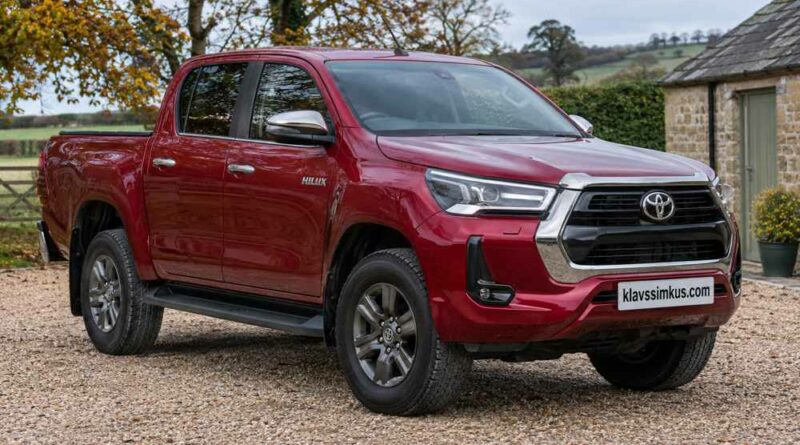
Toyota Hilux Problems and Used Pick-Up Buying Checks
Toyota Hilux problems need assessing against the truck’s generation, maintenance and working life. Before buying, I would prioritise the chassis, evidence of overloading, diesel warning lights and operation of the transmission and four-wheel-drive system. A tidy cabin and fresh underseal cannot tell me whether a pick-up has been properly maintained underneath.
This guide concentrates on UK used diesel examples, particularly the eighth generation. It explains how I would investigate warning signs rather than presenting every possible fault as a proven common failure. Repair decisions should follow diagnosis on the actual vehicle, with a written estimate before you agree a purchase.
Identify the generation and engine first
Toyota’s eighth-generation Hilux archive covers the UK model sold from 2016 to 2026, with 2.4 and 2.8-litre diesels and manual or automatic gearboxes. Older 2.5 and 3.0 D-4D trucks need their own engine-specific checks. I would not transfer an older engine’s reported fault directly to a later 2.8.
The facelift introduced the larger 2.8 alongside the 2.4, while a 48V mild hybrid joined the outgoing generation later. Check the VIN, engine details and original specification rather than relying on a registration year or an advert’s generic description. Imported vehicles may have different equipment and support arrangements. If you want a related seven-seat SUV, my Toyota Fortuner import guide covers 4×2 and 4×4 versions, chassis and towing checks, and Australian DPF history.
A ninth-generation Hilux now creates another distinction in used adverts. For a North American pick-up comparison, my Toyota Tacoma import buying checks cover its different petrol and hybrid powertrains, frame condition and current campaign questions. An electric Hilux, a diesel 48V Hilux and an older conventional diesel require different assessments. This article is not an electric battery-health guide.
Chassis corrosion and hidden repairs
I would arrange a safe raised inspection before making a decision. Look along the chassis rails, crossmembers, suspension mountings, body mounts and areas around the towbar. Surface corrosion needs distinguishing from deep scaling, section loss, cracking and poor previous welding. An MOT pass alone does not establish the condition of every concealed surface.
Fresh coating deserves questions, particularly if applied immediately before sale. Ask for photographs taken before treatment, an invoice explaining preparation and access to inspect the metal beneath where practical. Coating over mud, flaky rust or damaged sections can conceal the problem without correcting it.
Compare the cab and load-bed alignment, panel gaps and mounting points. Bent brackets, uneven gaps or mismatched repairs justify a body and chassis assessment. I would pause a purchase where structural condition cannot be established, rather than assume a discount covers an unknown repair.
Towing, overloading and suspension wear
A towbar tells me what to investigate, not that the vehicle has been abused. Ask what it towed, how often and whether maintenance reflected that work. Inspect the towbar attachment, electrical socket, rear chassis and evidence of modifications. Check permitted weights from the vehicle’s documents and plates, including the limits applicable to the intended trailer and load.
With the bed empty and the vehicle on level ground, compare ride height and inspect rear leaf springs, shackles, bushes and dampers. Broken leaves, uneven sagging or leaking dampers need investigation. A canopy, tools and accessories alter the load carried, so allow for them when interpreting its stance.
During a road test I would listen for knocks, check steering response and assess braking without carrying out aggressive manoeuvres. Uneven tyre wear could involve alignment, worn joints, tyre pressures or accident damage. The cause matters more than fitting another pair of tyres.
Diesel particulate filter warning signs
A Hilux used mainly for short cold journeys may be poorly matched to its diesel emissions system. Toyota’s DPF regeneration guidance explains how repeated interruptions can prevent soot being cleared. I would ask about the journey pattern and any previous warnings, regeneration work or filter replacement.
Look for warning messages, restricted performance and repeated visits for the same complaint. A diagnostic assessment should consider stored faults and relevant operating data before anyone condemns the filter. A sensor, temperature-control issue or engine problem can affect regeneration, so replacing the DPF without establishing the cause may leave the complaint unresolved.
Follow the handbook for the exact vehicle and message. I would not recommend an improvised high-speed drive or forced regeneration to clear an unexplained warning. Excessive soot loading, abnormal oil level or another active fault requires a workshop decision first.
Starting, injectors, turbo and cooling
Ask to see a genuinely cold start. Confirm the engine has not already been warmed, then observe cranking, idle quality, smoke and warning lights. Persistent rough running or smoke warrants testing, but neither identifies a failed injector by itself. Fuel supply, compression, air leaks and control faults may produce overlapping symptoms.
On the road, acceleration should be consistent with the engine and load. A whistle, loss of boost or oil leakage requires inspection of the intake, hoses, turbocharger and associated controls. I would not approve a turbo replacement simply because an advert says it needs one.
Inspect coolant level when cold, staining around hoses and radiator, and evidence of repeated topping-up. Stop the assessment if overheating or a serious coolant loss develops. On a working truck, packed dirt and damaged cooling components deserve attention as well as internal engine faults.
Manual clutch and automatic gearbox checks
Test a manual gearbox from cold and again after the vehicle has warmed. Note difficult selection, gear disengagement, slipping under reasonable load and vibration when moving away. Clutch wear depends on use, while hydraulic faults and other drivetrain problems can create similar complaints. Diagnosis should identify the affected parts before a repair is priced.
For an automatic, check engagement of forward and reverse, ordinary acceleration and changes in traffic. A repeatable flare, harsh shift or delayed engagement merits a specialist assessment. Review the maintenance history against Toyota’s schedule for that VIN and operating conditions, rather than impose one fluid interval on every Hilux.
Do not accept a cleared warning light as evidence of repair. Ask what was diagnosed, what was replaced and whether the symptom was reproduced after the work. A short demonstration on a warm vehicle is weak evidence when the complaint happens only from cold.
Four-wheel drive, propshafts and differentials
Have the seller demonstrate the fitted drive modes in accordance with the handbook, using a suitable location and surface. Some systems require a specific sequence or conditions. I would not engage a part-time four-wheel-drive mode on an unsuitable high-grip surface simply to prove the switch works.
Look for damaged protective components, oil leaks and impact marks around the transfer case and differentials. On the road, note vibration, clunks when taking up drive and noises that change between acceleration and overrun. Tyres, wheel balance, joints and bearings all belong in the investigation.
Ask for maintenance evidence relating to drivetrain lubrication where specified. Mud or water exposure makes the truck’s history particularly relevant. A seller’s claim that it has never been off-road should agree with the underside, bed and recovery equipment.
What changes on the Hilux Hybrid 48V?
Toyota’s UK 48V launch information describes a 2.8-litre diesel assisted by a motor-generator, lithium-ion battery and DC-DC converter. This is a mild hybrid, not the same drivetrain as a petrol-electric Toyota SUV and not a plug-in model.
I would check system warnings, restart behaviour, service records and any previous electrical repairs. Inspect accessible wiring and cooling provisions without disturbing electrical components. Belt or tensioner noises need identification by the correct workshop, rather than being dismissed as a normal hybrid characteristic.
For buyers comparing family vehicles, my Toyota RAV4 buying checks explain a different hybrid layout. Choosing between the two starts with the work required: load-bed use and towing needs are different from ordinary family-SUV duties. If you need an enclosed four-wheel-drive vehicle instead of a load bed, my older Land Cruiser buying checks explain the chassis, diesel and suspension questions to investigate.
Recalls, accessories and service evidence
Use Toyota’s UK recall checker with the registration or VIN and ask a Toyota centre to clarify any outstanding action. Campaign eligibility is vehicle-specific. An overseas report is not sufficient evidence that a UK truck has the same recall or entitlement.
Test fitted cameras, parking sensors, lighting, windows and air conditioning. Inspect aftermarket towbar wiring, auxiliary lamps, trackers and leisure electrics for secure installation. Poor accessory wiring may create battery drain or intermittent faults that a replacement battery alone will not cure.
Match service invoices to mileage and dates. Look for the correct engine oil specification, relevant scheduled work and evidence of repairs behind repeated advisories. Missing records increase uncertainty even when the truck starts well. Ask the seller to supply missing invoices before treating an unsupported service claim as established history.
My pre-purchase decision checklist
- Confirm generation, engine, gearbox and UK or import specification.
- Arrange safe access to inspect the chassis and suspension thoroughly.
- Review cold-start behaviour, warning messages and diagnostic findings.
- Check towing history, accessories and permitted weights for your intended use.
- Test the transmission and drive modes using the correct procedure.
- Obtain written estimates for identified defects before negotiating.
If you want an independent vehicle inspection, confirm access arrangements and the agreed checks before booking. A visual inspection and road test have limits; internal engine condition, dismantling and specialist electrical testing may require separate work.
I would favour a truck with a sound, inspectable structure and coherent maintenance evidence over one sold mainly on the Hilux name. Where a defect remains unexplained, resolve it before purchase or choose another example. An attractive price cannot make an unknown structural or mechanical problem predictable.
If you are also considering a Nissan pickup, my used Nissan Navara buying guide covers the older D40 chassis and the later NP300’s diesel and four-wheel-drive checks.