What is a car differential? Checks for used-car buyers
A differential lets the driven wheels turn at different speeds while the car is turning. When I check a used car, I want to know which differentials are fitted, what maintenance they require and whether an unusual noise or sensation has actually been traced to one of them. A whine can come from tyres, wheel bearings, gears or other parts of the driveline. I describe when it happens and ask for evidence before pricing a repair. That matters especially on cars with all-wheel drive or an optional performance differential.
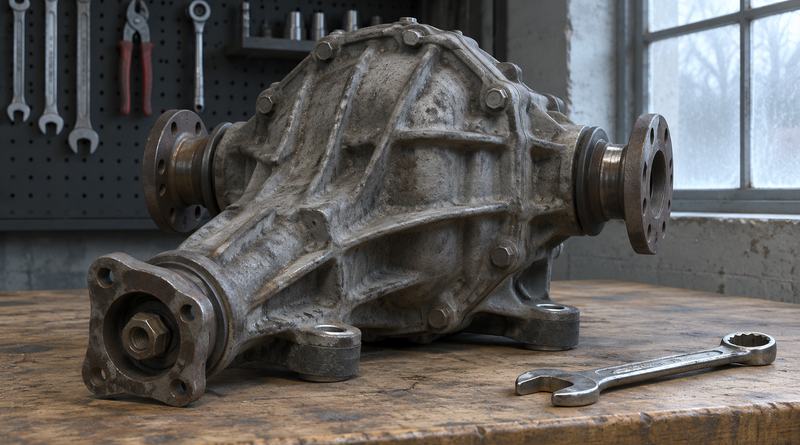
Featured image: AI illustration of a rear differential housing on a workbench.
Check roadworthiness and recalls before any test
Look up the car using the GOV.UK recall checker and ask the manufacturer about open and completed campaigns for the actual VIN. For an import, check the original market as well. Follow any VIN-specific stop-drive, parking or other restrictions before moving the car or arranging a demonstration. If the car loses drive, has a significant fluid leak, makes a severe grinding noise or shows a warning that requires a stop, follow the handbook and arrange qualified assessment or recovery. Tell the provider which wheels are driven and follow the manufacturer’s transport instructions.
What a differential does
The outside wheel travels farther than the inside wheel when a car turns. If the two driven wheels were constrained to rotate at the same speed, one would tend to scrub as they tried to follow their different paths. An axle differential lets the speed differ while both driven wheels can receive torque. Component maker Eaton explains this basic function and describes open, limited-slip and locking designs. How a particular car responds when traction varies depends on its design and electronic controls.
A final drive provides a fixed reduction before drive reaches the wheels. It may sit in the same assembly as a differential. On many front-wheel-drive cars the differential is integrated into a transaxle. A rear-wheel-drive car with a separate rear assembly may have a different service process. An all-wheel-drive vehicle can have axle differentials and use a centre differential or an electronically controlled coupling to manage front-to-rear drive. Some EVs use different drive units on different axles. Ask which unit is meant when an advert or workshop bill says simply “diff”. My propeller shaft guide explains how that shaft differs from the differential and what to check if you notice a vibration.
Identify the design fitted to the actual car
An open differential allows the two driven wheels to rotate at different speeds. In low grip, traction at one wheel can limit usable driving torque. A limited-slip design can bias torque or limit the speed difference within the design’s operating range. A locking design can constrain the axle shafts to turn together when engaged. Each has its own limits and instructions. I would use the handbook for any lock or off-road mode, including where it can be used. A road-going demonstration does not require provoking wheelspin or trying a lock on a surface where it is unsuitable.
Check the build details, including production date, powertrain and driven wheels. A sport package may use a different unit from the basic model, and the same badge can cover different configurations in different markets. If a seller says an electronic feature is a mechanical limited-slip differential, ask them to confirm the actual part and how the feature works on the car. My limited-slip differential guide covers how to identify the fitted type and what I check when there is noise or binding. Where a previous owner fitted an aftermarket unit or changed a ratio, request the invoice and component data. Check the modification with your insurer and ask the fitter what service it needs.
Read the service history and look for leakage safely
I compare invoices with the schedule for that exact axle or drive unit. A description such as “transmission service” does not tell me that the rear differential was included. Ask what was done, what fluid was used and whether the job involved an inspection, a replacement seal or an internal repair. A Ford axle-fluid handbook example illustrates why the fitted design matters. Use the manufacturer’s specification for your vehicle rather than assuming a particular oil or additive fits all variants.
Look from a safe position beneath the place the car normally parks. Fresh drops or an oily area underneath may need a lift inspection to trace. The place where a drip lands does not always show where it began. Ask whether a repair addressed the cause and whether the unit was checked for leakage afterwards. If a previous owner towed regularly, used the car off road or reports that an axle was submerged, mention this to the workshop and ask what the manufacturer recommends for that use. Leave any significant leak for safe assessment before driving.
Describe noise and vibration so someone can find the cause
After the car is cleared and you have permission and cover to drive, choose an ordinary route. I note when a whine, knock or vibration begins, whether it changes with road speed, and whether it is different under light acceleration, steady throttle or when coming off the accelerator. If it seems tied to a bend, note whether it is one direction. Tyre noise can change with the road surface. A wheel bearing, propshaft or mount can produce sounds that are hard to place from the driver’s seat. Ask the workshop to reproduce the symptom and say what it found before paying for a differential repair.
For a clunk when taking up drive, record whether it occurs just once after a direction change or repeatedly under gentle changes of load. Ask the technician to check the other relevant components and identify what movement is acceptable. For a shudder while parking an all-wheel-drive car, check tyre fitment, pressures, wear and workshop history. Some systems have specific tolerances for differences between tyres. Follow those before ordering a single tyre or assuming the coupling or differential is at fault. My guide to choosing the right car tyres explains what I check before ordering replacements.
Get a diagnosis that matches what you felt
- Record the conditions and any dashboard warnings. If a warning came first, tell the workshop which one and whether the system later returned to normal operation.
- Ask the technician to distinguish axle and wheel noises from faults elsewhere in the driveline. Get a written description of tests and findings for the correct VIN.
- Compare the tyre sizes and specifications on the car with the approved fitment. Mention a recent change of tyres or wheels before asking for a driveline diagnosis.
- Ask whether maintenance evidence, a unit identification and any scan records support the proposed repair. If work is needed, request its scope and the tests that will follow it.
I would ask who supplies replacement parts, whether they are new or reconditioned and whether coding or another set-up step is required. Where a replacement from another vehicle is proposed, make sure the workshop has checked compatibility with the remaining drivetrain. Ask how any warranty covers labour as well as parts. If there is only an estimate for further investigation, keep that separate from the repair price. A budget based on one guessed part can look very different after the workshop identifies the root cause.
Compare symptoms and previous work in context
Imagine a seller says a whine began after new tyres were fitted. I would find out what was changed, check the date on the invoice and note whether the sound varies with the surface or with load at a steady speed. Ask whether the fitter checked the bearings, pressures and approved tyre fitment. The timing helps direct the investigation, but ask a workshop to confirm the source. Conversely, a car with new tyres and a quiet drive today might still have a leaking axle seal that needs an assessment. Look at current condition as well as what you heard.
If a differential has already been repaired, ask whether it was opened, resealed or replaced as a complete unit. Compare the part details and mileage with the invoice, and ask why the work was done. I would want to know whether the workshop did a comparison drive or another suitable check and whether the seller has noticed the original issue since. If there is a modification, ask whether the documents establish that any required changes to related systems were made and recorded.
Different vehicles justify different priorities. If you need a car for regular towing, check the manufacturer’s limits and the schedule for that use, then ask how the existing owner used it. An electric car can have a very different driveline and may need a technician with the equipment and training for that vehicle. Get the correct owner information before relying on advice for a similarly named petrol or diesel car. If the concern is intermittent, agree how a specialist will evaluate it and when you will see the findings.
Compare a clean history with an unresolved fault
If two otherwise similar cars interest me, I compare the level of certainty. A car with a documented repair and a clean assessment can be easier to judge than a lower-priced one with a noise the seller cannot explain. On the first, check who did the work and what was tested afterwards. On the second, ask what an independent specialist can determine before payment and get permission for those checks. If the seller offers to repair it, record what has been agreed and how you will verify it before collection. For help assessing a specific used car, you can book a vehicle inspection with me.