Wrong mileage on an MOT: how to correct the record
If the mileage on an MOT record is wrong, I start by checking the test date, the number recorded and the unit. Those three details tell me whether the entry could be a typing error, a miles and kilometres mix-up or part of a larger gap in the car’s history. The way to correct wrong mileage on an MOT in England, Scotland or Wales also depends on whether the test was within the last 28 days. In Northern Ireland the route is through the Driver and Vehicle Agency. If you are buying the car, ask for evidence before paying or treating an explanation as settled.
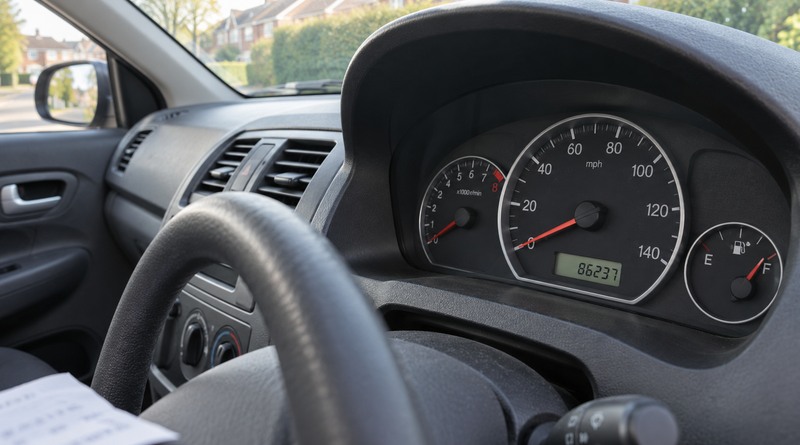
Featured image: AI illustration of an odometer in a parked car.
Check the actual MOT entry, odometer and units
Use the official GOV.UK MOT history service and enter the vehicle’s registration. I record the test date, the entry for mileage or distance, the units displayed and the previous and next test results where available. Compare them with the total odometer, which is distinct from a resettable trip reading or estimated fuel range. An online advert may show miles while an imported vehicle’s total odometer still shows kilometres. Look at the unit alongside each reading before drawing any conclusion about mileage going backwards.
A change from kilometres to miles can make a figure look lower even when the vehicle has travelled further. For example, 100,000 kilometres is about 62,137 miles. A slip such as entering 62,418 instead of 62,148 may be an isolated transcription error. Both examples are illustrations. I need documents for the actual car before I label a discrepancy. On a vehicle that has had an instrument cluster replaced, ask for the reason, date, recorded readings before and after, and any workshop or coding information. I keep those figures distinct from a documented total distance that can be verified independently.
England, Scotland and Wales if the MOT was within 28 days
I contact the MOT centre that tested the vehicle promptly. The DVSA documentation guidance for test stations says odometer corrections by the centre can be made within 28 calendar days of the test. It also says the replacement reading must be the one seen on the day the change is made. Ask whether the centre needs the vehicle back and how to bring the relevant paperwork. Have the date, certificate number and registration ready. I would bring the car to the centre if it asks and it is lawful and safe to do so.
The revised mileage can therefore differ from the reading on the original test day if the vehicle has been used since. Ask the centre to explain how it handled the correction and keep the replacement certificate or confirmation. Check the official history again after the change. If the centre cannot help or the deadline is close, use the official report a mistake service to find the correct route. Do not wait for the next annual MOT to try to fix a mistake in an earlier entry.
England, Scotland and Wales if more than 28 days have passed
I use the DVSA online MOT record correction service and gather a document that shows the actual mileage around the test. The service lists invoices, emissions printouts, service receipts or service records, and a job card or inspection sheet from the MOT centre as examples. The evidence must identify the registration or VIN, show the mileage and be dated within one day of the test. A photo of the dashboard is useful to keep for your own comparison, but the published service does not accept it or the MOT certificate as evidence for this request.
Ask the garage or MOT centre for a copy of its contemporaneous job card or emissions printout if you do not have qualifying paperwork. I take care that the document and the entry match the same vehicle and date. The form asks for vehicle and test details as well as your details. Submit personal documents only through the official service or the route DVSA gives you. GOV.UK says a reply usually arrives within eight weeks and can take longer. Keep the reference and your evidence, then check the online record when you receive the decision.
Northern Ireland uses a separate process
The GOV.UK correction form excludes tests carried out in Northern Ireland. I contact the test centre or DVA in Northern Ireland and ask what to submit for a mileage-record mistake. Have the registration, test date, test centre and any dated evidence to hand. The GOV.UK history site can show Northern Ireland test results, but the place where the test happened determines which correction team to contact. A factual odometer correction and an appeal against an MOT pass or fail are separate matters. Tell the agency exactly what you believe was recorded incorrectly.
What I check before buying a car with a mileage discrepancy
I ask the seller for a timeline and independent documents rather than a verbal explanation. Start with earlier and later MOT entries and then check service invoices, inspection sheets and any cluster-replacement paperwork. A servicing entry can also be copied incorrectly, so compare more than one record and check that the vehicle details match. Look at the wear on the steering wheel, seats and pedals as clues. A retrim, replacement part or different driving pattern can change wear. It cannot establish the odometer reading when an old MOT was carried out.
If a recorded drop, mismatch in units or replacement cluster can be explained, ask for that explanation in writing and check whether the official record has been corrected. If it cannot, I treat the mileage as unverified when deciding whether to buy. I also check age- and mileage-based maintenance, since an uncertain reading affects what servicing I can establish is due. My guide to buying a car from a private seller explains how I compare the history with the documents and car before paying.
An error in one MOT result is insufficient to establish deliberate mileage tampering. If there are several inconsistencies, the seller will not share the records, or the advert makes a mileage claim you cannot reconcile, preserve the advert, report and conversations. If you already bought from a trader and believe the mileage was misrepresented, contact the seller in writing and use the appropriate consumer advice service. The Competition and Markets Authority’s guidance on unfair practices gives examples of misleading mileage statements. The route you use depends on the transaction and where you are in the UK.
Build a mileage timeline the seller can substantiate
Start with the oldest dated record you can find and write each later entry beside it. Note where the figure came from and whether it is in miles or kilometres. If one reading stands out, ask for records from immediately before and after the relevant test before asking the seller to explain it. Where a replacement instrument cluster was fitted, ask if the invoice records readings from the old and new unit. If it lists no reading, inventory exactly what evidence still exists. On an import I ask for original-market documents with their dates and units. A converted number can help line up the timeline, while the original entry should still be kept as it was recorded.
I handle an unresolved discrepancy differently depending on what I need the car for. If I want it for regular use and important maintenance depends on its mileage, confirm which services can be proved and which I need to repeat. A seller who wants to keep the deal moving can arrange a correction and send the confirmation before collection. If you do make an offer while a correction is pending, write down what evidence it depends on and how you will handle a refusal or delay. That is more useful than assuming the new record will appear before your planned purchase date.
Where you own the car, keep copies of evidence even after the official entry changes. Ask the test centre or service agency to identify the entry corrected and the date, particularly if you still have the first printout. Check the completed update against the registration and the intended test before using it in an advert. A clear description of an instrument change can explain why the visible odometer differs from the distance documented over the car’s life. If the correction service cannot amend the record on the evidence you have, keep its reply and be clear about what remains uncertain when the car changes hands.
When I organise the evidence, I put the registration, document date, reading and units in four separate columns. I keep copies of any invoices that explain a replacement instrument or conversion, and keep the original test entry with the correction confirmation. If a single document gives a figure that disagrees with the rest, I ask the workshop that issued it to confirm the figure it recorded. That is easier while the garage still has its records and the seller can explain the circumstances.
Keep the evidence before the sale or next MOT
- Before leaving the test centre: compare the certificate or online entry with the car’s total reading and unit. If it differs, ask while the test is still recent.
- Keep dated records: save test-centre paperwork, service invoices, and information about cluster replacements or units changing after import. Check the registration or VIN on each.
- Check the result after correction: reopen the official history and keep the agency’s reply or replacement certificate. If the discrepancy remains, describe it clearly to the next buyer and retain the supporting paperwork.
If you are considering a car with a gap or change in its mileage record, you can book a vehicle inspection with me. Share the registration, the dates and the seller’s explanation before the viewing. I can compare what is visible on the car with its documents and advise which evidence is still needed to support the history.