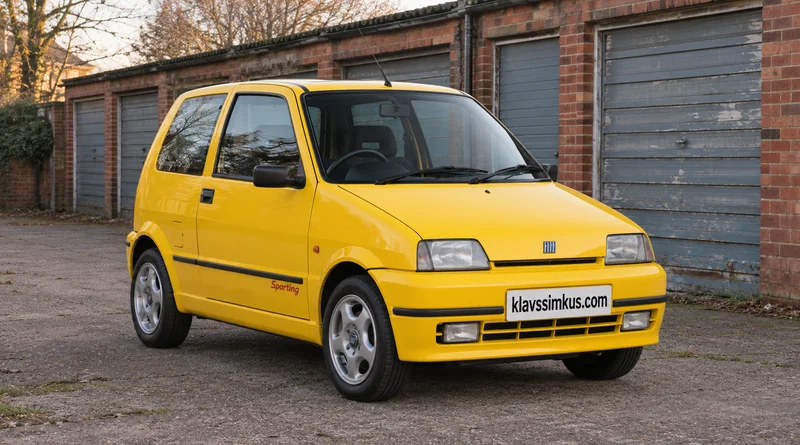
Fiat Cinquecento Problems and UK Classic Car Buying Checks
The Fiat Cinquecento problems I would investigate first are corrosion around the sills, floor and suspension mounting areas, unexplained overheating, and difficulty selecting gears. Condition matters more than mileage alone on a small car of this age. Start with the history, a genuine cold start and safe access to the underside. If it is advertised as a Sporting, check the original specification and what is fitted today. A service history and a tidy interior help, but neither shows what is under new underseal or why coolant was last topped up.
Identify the 899 cc Cinquecento or 1.1 Sporting
Fiat’s period Frankfurt show release describes the 899 cc SX and the 1,108 cc FIRE engine in the Sporting. The AA’s period used-car report provides context for the original UK model. If a car is advertised as a Sporting, ask for evidence from its identifying details and registration paperwork. Seats, wheels, trim and badges can be changed. The later Seicento shares some ideas and components but the workshop should confirm the part application for the actual car.
On a car that has been changed, find out whether the engine, transmission, suspension or brakes are standard. Ask for receipts, a description of who carried out the work and any original parts that come with it. If there has been an engine swap, match the fitted engine and paperwork before asking for a service quote. Discuss modifications with the insurer before relying on a price. An owner may be happy with a previous setup even when it does not suit the use you have in mind.
Look underneath before making an offer
I would inspect visible sills, jacking areas, arches, floors and the areas around suspension mounts and other load-bearing points. Look for flaking, holes, deformed metal, poor repairs or coating placed over uneven surfaces. Check the underside from safe access and use a workshop lift when a proper assessment needs it. Look at the brake pipes, exhaust supports and other accessible areas. If the car has been repainted, look for the condition of the underside and the edges near repaired panels instead of judging the work from the finish alone.
Read the GOV.UK MOT history as a dated record. Repeated corrosion findings warrant a look at the invoices and affected area. Ask for photographs showing what was removed, repaired and protected. If the estimate covers only metal already visible, find out what may change when protection or trim is removed. A freshly coated underside can make a visual inspection less conclusive. I would get the extent of any structural corrosion scoped before paying for other work that depends on the car remaining usable.
Start it cold and check the cooling history
Ask the seller to leave the car cold. Watch how it starts, idles and warms up. Ask whether the radiator, hoses, fan, thermostat or head gasket have needed work and why. Check for visible staining, loose fittings or signs of a recurring leak. If the owner reports coolant loss, ask how often it happened and whether a workshop performed a test. Smoke, an unusual smell and residue under a cap are each observations that need context. A combination of symptoms can justify further investigation before a longer drive.
A repair invoice is more informative when it records both the cause and what the workshop checked afterwards. If it has had a head gasket, ask what was done about the reason it overheated and whether the car has completed comparable journeys since. If the temperature warning appears or the car begins to overheat, stop safely and arrange diagnosis rather than continuing to test it. Leave a hot coolant system to cool. On an old car that has sat for a long time, ask a workshop to assess hoses and fluids before depending on it for daily use.
Check timing evidence, gear selection and the clutch
The 1.1 FIRE Sporting has a timing belt application listed in the Continental application guide. Check the engine identification and the applicable schedule. Do not apply the Sporting’s service requirements to an 899 cc car or assume any invoice for a visible drive belt is for the camshaft timing. If the fitted engine is belt driven, ask for the dates, mileage and details of replacement work. An uncertain history is a reason to confirm what is due and obtain a quote before putting it into regular use.
With the seller’s permission and where it can be driven safely, try normal take-up, gear selection and a reverse manoeuvre. Note whether difficulty happens on one gear, when the engine is warm or also with the engine switched off. A stiff control, clutch release problem and an internal gearbox issue call for different investigation. If the advert says it only needs a cable, ask who diagnosed it and why. A repeated knock or vibration can also come from a mounting or suspension part. Have its source checked before pricing the repair.
Check the brakes, tyres, steering and everyday equipment
Look at the age and condition of the tyres and check both edges of the tread. Inspect the wheel rims and ask what prompted any recent replacement or alignment. If the car has spent time off the road, ask whether the brakes and flexible hoses have been inspected and whether the parking brake releases properly. A short road demonstration can help identify a pull, vibration or noise if the car is already fit to drive. Get steering or brake concerns inspected before trusting it for a longer journey.
Operate the lights, indicators, wipers, heater fan, locks and windows as applicable. In the cabin and boot, check for damp, stains and wear under accessible mats or covers. Inspect the condition of the original seats and trim if the seller is charging a premium for originality. Check that the spare, tools and keys are included if the advert says they are. Look for wiring added for an alarm, stereo or other accessories and ask how it was installed. When replacement trim is difficult to match, find out what parts can be sourced before assuming it is a small job.
Decide whether it is ready to drive or a recommissioning project
Ask when it was last used regularly and for what type of journey. If it spent years in storage, check which work has been done since to tyres, brakes, battery, fluids and cooling. An old service stamp may pre-date its time off the road. Check the timeline and obtain a workshop’s assessment of immediate work, especially before a motorway journey. Ask whether the seller can show the results of promised checks. If it cannot be driven safely, plan appropriate transport and account for that separately in the price.
- Body condition. Agree which areas can be inspected underneath and get the extent of any welding scoped.
- Mechanical history. Confirm the actual engine, timing requirements, cooling work and any diagnostic evidence.
- Costs. Ask for parts, labour and VAT itemised. Find out whether the garage has access to the correct pieces.
- Handover. Confirm keys, records, included equipment and the work agreed before collecting the car.
My UK used car buying checklist covers the documents and practical checks that apply before arranging a viewing. For a vehicle inspection, send the advert, records and any concerns about corrosion or overheating so the scope can be agreed. Use a suitable workshop where lift access or cooling diagnosis is needed. I would compare Cinquecentos on confirmed condition and the work they need before relying on rarity or mileage to set the budget.
Compare repairs to the use you want from the car
If you are buying the Cinquecento for occasional journeys, check whether the seller has already put regular miles on it after a period of storage. Ask how it starts hot and what happens in slow traffic, where an earlier cooling fault may have shown itself. For regular use, try the driving position, visibility and gear change yourself when the car is safe and you are insured. Decide which faults would stop you using it and which cosmetic issues you can accept. The best-looking car in the advert may still need work before it suits your plans.
If a quote is for a small patch, ask how the workshop assessed the metal around it and whether any other areas need opening up. If repair pricing depends on trim or body panels, check availability and lead time rather than assuming a part is easy to obtain. Ask which areas the seller agrees to make accessible before you pay. I would keep structural items distinct from scheduled work and cosmetic improvements when comparing two cars. That helps avoid spending money on items that matter only if the underlying car is worth repairing.
At handover, ask the seller to show the invoices for any promised repairs and the result of a relevant check. Keep original handbooks, keys and notes about changes with the car. If it has had a respray or engine swap, record the details you can verify. Those records help the next workshop choose the correct parts and give a future buyer a clearer account of what was done.
If you need six usable seats and space for family luggage, my Fiat Multipla buying guide explains how to check the seat mounts, rear suspension and underside on Fiat’s larger MPV.
If you are looking for a newer small Fiat for everyday trips, my Fiat Panda buying guide explains what to check on the TwinAir, Dualogic, 4×4 and mild hybrid versions.