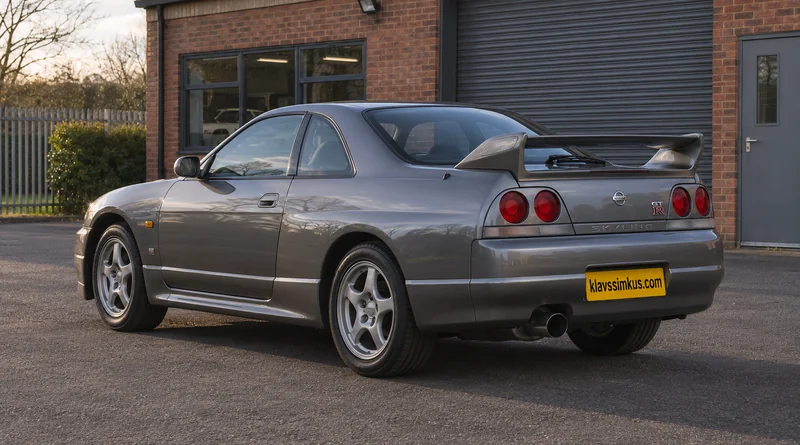
Nissan Skyline Problems and UK Import Buying Checks
The Nissan Skyline problems I would investigate first are corrosion or old accident repairs, an unexplained engine rebuild, unverified modifications and gaps in the Japanese and UK history. Before looking at repair costs, establish exactly which Skyline it is. An R34 GT-T, an R34 GT-R and a later V35 are different cars, and a GT-R-style body kit does not prove the original specification. I would start with the chassis number, a documented cold start and a lift inspection before committing to buy.
Confirm the chassis code and original Skyline specification
Nissan’s heritage records cover the R32 GT-R, R33 GT-R and R34 GT-R generation. For the GT-R versions, check the expected BNR32, BCNR33 or BNR34 chassis designation and match the physical identification to the records. The RB26DETT and ATTESA system apply to the Skyline GT-R models covered here. Nissan’s ER34 25GT Turbo record provides an example of a different Skyline within the R34 generation.
The later V35 350GT illustrates the move to a V6 platform. The R35 Nissan GT-R launched in 2007 belongs to a different model line from the Skyline GT-Rs discussed here. If the advert says GT-R, V-Spec or a particular factory edition, request the build details and corroborating documents. Record the label and numbers on the car, and have a marque specialist look at any area where identification or a past repair is unclear. Buying a parts-converted car and paying for a factory edition involve different decisions.
Inspect corrosion and body repairs with safe lift access
I would check visible sills, jacking points, rear arch areas, floor edges, suspension mounting areas and the alignment of panels and structural areas that can be seen safely. Pay attention to paint differences and how repairs were finished underneath. Fresh underbody coating and a clean exterior can conceal work. Ask for photographs before and during any welding or restoration. If the seller says parts were repaired after a collision, establish which panels or mountings were affected and request invoices and alignment evidence.
Older cars can have several layers of work carried out at different times. Checking the outside of a sill gives limited information about its inner structure. Arrange a lift and agree in advance whether an area needs additional access. A paint reading is one observation and depends on the substrate and finish. I would compare multiple observations with the records. If a modification required drilling, cutting or relocating components, ask how it was carried out and whether returning to original specification is possible.
Start the engine cold and verify modifications before pricing it
Ask to see the first start of the day and watch whether the car runs consistently as it warms. Ask about low oil pressure, overheating, smoke or repeated fluid top-ups. If the old invoice describes an engine rebuild, find out whether the work followed damage, wear or a planned change. Request a parts list, mileage, photographs where available and any results after completion. An engine or turbo with a well-known part number can still be poorly matched to the other components or calibration.
On a tuned car, ask who set up the engine management, what fuel it requires, and whether the seller has a current parts list and calibration record. Compare what is fitted with what is described. Ask about the timing service on an applicable belt-driven RB engine and read the invoice for the parts, date and mileage. Do not apply an RB timing schedule to a VQ-powered car. If there is a serious oil pressure or temperature warning, stop the demonstration safely and have it investigated. A garage should establish the cause before quoting for an oil pump, turbocharger or engine work.
Drive the gearbox and identify the systems fitted
With permission, if the car is safe to drive, check normal clutch take-up, both cold and warm shift behaviour and whether a noise changes on acceleration or when you lift off. On an automatic, note any hesitation selecting Drive or Reverse. Ask the workshop to locate the source of noise before pricing a gearbox, differential or wheel bearing. Confirm whether original or replacement parts are fitted, including any conversion from automatic to manual. A modified clutch may feel different by design, but slipping or persistent difficulty engaging a gear still needs diagnosis.
On a GT-R, check for an all-wheel-drive warning and ask what maintenance or diagnosis has been recorded. If four-wheel steering is fitted, ask whether it operates as originally intended or has been modified. Compare tyre sizes, wear and wheel fitment with what the car requires. Check who carried out any setup or alignment and make sure the written recommendation relates to the actual car. A rear-wheel-drive Skyline in the same generation needs a different driveline assessment.
Reconcile mileage and paperwork before relying on an import history
Ask for the original Japanese export or deregistration record where available, plus a reliable translation, related documentation and UK registration evidence. My used car import guide explains the process separately. Check the GOV.UK import guidance for an unregistered car and verify any current approval requirement for the individual vehicle. For a registered car, match its details to the V5C and available MOT history. That shows only part of the history if the car spent years overseas.
Record whether each mileage entry uses kilometres or miles. Ask when the speed display or odometer was converted, what the installer changed and whether the cluster was replaced. Put comparable readings into the same units before drawing a conclusion. An auction sheet, service invoice and module reading each need context. A gap or conflicting reading calls for more evidence. If original-market campaigns are relevant, Nissan has a Japanese recall checker that uses the chassis identification. Ask Nissan or a relevant specialist how to verify completion if the car has moved markets.
Agree specialist checks and get repair figures for this car
- Identity and value. Verify the chassis and build, original specification and any changes before pricing a rare version.
- Mechanical condition. Request the timing, engine and drivetrain evidence. Have a specialist scope any tests for recurring warnings.
- Bodywork. Ask which areas can be seen on a lift and what further access is needed before a repair can be estimated.
- Quotes and use. Get the scope, labour, parts, VAT and availability in writing and confirm your insurer accepts the modifications and import specification.
If you arrange a vehicle inspection, send the advert, chassis number and paperwork before the viewing. Agree what can be checked on site and organise marque-specific tests separately if necessary. I would compare only the work supported by evidence, then account for the time and cost of unresolved questions before agreeing a price.
Later V35, V36 and V37 checks differ from an RB Skyline
Nissan’s 350GT-8 archive identifies the Extroid CVT used in that particular V35. The later V36 specification includes a 370GT with the VQ37VHR V6. For the V37, Nissan’s Japanese announcement includes the VR30DDTT turbocharged V6. Check the exact engine and transmission before asking for service guidance. If the car has a hybrid system or later driver assistance, find out who can read its modules and obtain parts for a Japanese-market car in the UK.
I would test the cabin and electronics while the seller is there. Try the speed display, camera, climate settings, controls and any safety features you will use. Confirm whether navigation, radio and vehicle settings work as you expect on British roads. If the car has had a screen, camera or other hardware changed, ask what programming or calibration was needed. A useful invoice identifies the part and describes which functions were verified afterwards. On a version with a warning or unusual gearbox behaviour, obtain diagnosis before accepting a quote based on a different transmission.
Check the claim, the parts and the paperwork together
When a car is advertised with a specialist engine build, ask for invoices and the dates alongside the vehicle’s mileage at each stage. Find out which components were kept, which were replaced and who carried out the work. If the seller is providing a dyno sheet, verify that it belongs to the current configuration and find out what changed afterwards. If the car has changed owners several times since a restoration, ask for copies of records from before and after the work. Where the reason for a change is unclear, use a specialist to work out what it means for servicing and value.
Look at the other information needed to actually use the car. Confirm the parts supply for the fitted engine or gearbox, which workshop will support the car locally and whether the insurance company will accept the modifications. If a fault is active or the seller offers work before handover, agree how the original concern will be checked and ask for the invoice afterwards. Before comparing two Skylines with different histories, allow explicitly for the repairs you can verify and the time needed to investigate anything still uncertain.
Before paying a deposit, ask the seller to put the advertised model, chassis number, mileage units and included paperwork on the sale documents. If an inspection finds a discrepancy, resolve it with the original records while the car is still with the seller. The same checks help avoid ordering parts for the wrong car after purchase.