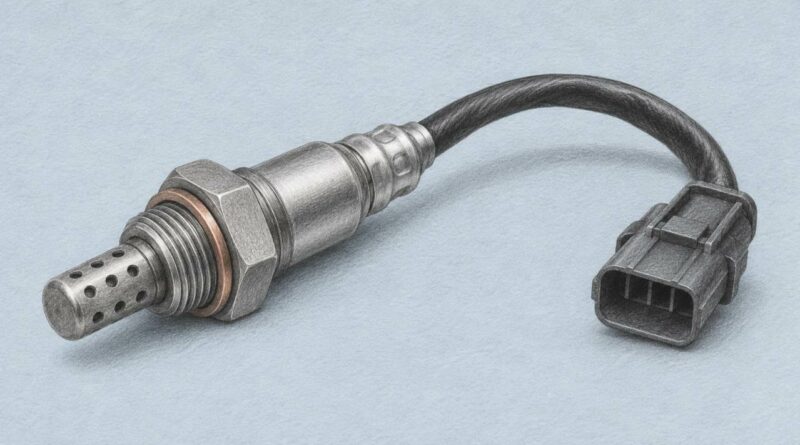
Oxygen Sensor Replacement Cost UK: Quotes, Diagnosis and Checks
Oxygen sensor replacement cost depends on the exact vehicle, sensor position and work required. As a guide checked on 7 November 2026, ClickMechanic publishes an average of £150 and a range of £110 to £220. These are that provider’s guide figures, not a guaranteed UK price or a quote for your car. Confirm what an actual estimate includes.
I would establish whether the sensor is faulty before treating any headline price as the repair budget. A warning light, high fuel consumption or a code mentioning oxygen does not automatically prove that a new sensor is needed. When buying a used car, the important question is whether the seller has a supported diagnosis, not simply a cheap part listing.
What does an oxygen sensor do?
An oxygen sensor, often called a lambda or O2 sensor, measures residual oxygen in the exhaust. Its information supports relevant engine-management and emissions functions. The exact job depends on the design and location. Bosch’s switching-type lambda-sensor overview explains its role in providing information for mixture control. Do not confuse an oxygen sensor with a NOx sensor.
Different technologies also matter. A wideband sensor can measure across a broader operating range than a basic switching-type description suggests. Bosch’s wideband-sensor information describes applications in petrol and diesel engines. A generic online voltage test is therefore not a universal diagnostic procedure for every sensor fitted to every car.
Why two quotes can be very different
Start by confirming that both estimates cover the same fault and component. A car may have several sensors, and an estimate for one is not an estimate for all of them. The engine, exhaust layout and sensor specification matter more than a broad description such as “a sensor for a Volkswagen”. Use the registration and accurate vehicle details.
- Confirm the exact sensor position and the quantity being replaced.
- Ask for the part specification, labour charge and VAT position.
- Clarify whether diagnosis, post-repair checks and any necessary setup are included.
- Ask how additional work will be authorised if access or damaged threads complicate removal.
A low advertised part price can be useful only if the part is correct and the job is properly scoped. Equally, a higher estimate needs an explanation of what it includes. I would compare written descriptions before assuming that one workshop is overcharging or another has found a bargain. Prices and availability change, so obtain a current vehicle-specific estimate.
Separate diagnosis from replacement labour
Reading a code is one step in diagnosis. Further investigation may involve wiring, electrical supply, exhaust leaks and appropriate live readings. DENSO’s lambda-sensor fault-finding guidance recommends a systematic assessment, including service history and checks of the wider system. It also highlights connections and components affected by recent work. Those checks can prevent replacement of a sensor that is reporting another problem.
Ask whether a diagnostic charge is separate from fitting and what the investigation will deliver. If a garage has not yet established the cause, an initial diagnostic estimate may be more honest than a fixed repair promise. Agree a limit for the initial work and request approval before additional components are ordered. Keep the test findings with the invoice.
Symptoms that need investigation
An engine warning, rough running, poor emissions results or worse fuel economy can justify investigation, but none identifies an oxygen sensor on its own. Record when the problem occurs and whether it followed recent repairs. My fuel-economy guide explains why journey changes and measurement errors should also be considered before blaming a component for higher consumption.
If the engine misfires severely, loses substantial power or displays a warning requiring you to stop, follow the vehicle’s instructions and arrange help. Do not keep driving simply because a seller says the problem is “only the lambda sensor”. My ignition-coil guide explains another area where similar running symptoms need a supported diagnosis.
A code description is not a shopping list
A code can refer to a sensor circuit, heater, signal behaviour or another monitored condition. Its description needs to be interpreted with the manufacturer’s information and the car’s actual behaviour. Clearing the code and waiting for the light to return is not the same as identifying the cause. A failed emissions test likewise needs interpretation before parts are chosen.
The engine-management system uses information from several sources. A reading that looks unusual may be related to operating conditions or another fault, so testing must suit the actual sensor and vehicle. I would want a clear explanation of why the sensor itself was condemned and which alternative causes were considered, rather than an unexplained screenshot from a scanner.
Choose a suitable replacement part
Check the application carefully, including engine variant and sensor location. A matching thread or connector appearance does not establish that a sensor has the correct electrical characteristics. An aftermarket part is not automatically unsuitable, and a manufacturer-branded box does not remove the need for correct fitment. The relevant specification and supplier’s application information are essential.
Ask whether the quote covers a direct-fit part or a universal product requiring additional connection work. Do not assume that cutting and joining an existing lead is appropriate for the vehicle. Installation needs the correct procedure, including handling, cable routing and any specified tightening requirements. These are reasons to use a competent workshop where the work exceeds your equipment or knowledge.
Access can change the amount of work
A sensor mounted in an accessible position can be a different job from one obstructed by other components. Corrosion, seized fittings or damaged threads can also complicate removal. An honest estimate should explain how such findings will be handled. Do not treat a video showing an easy removal on another car as proof that your vehicle needs the same labour time.
Avoid working around hot exhaust parts or beneath a vehicle supported only by a jack. Do not disconnect equipment during a seller’s viewing or attempt electrical testing without the appropriate procedure and competence. The potential saving from doing the work yourself needs to be weighed against access, equipment and the consequences of an incorrect repair, rather than against the part price alone.
Do all oxygen sensors need replacing together?
There is no universal instruction to replace every sensor because one has a confirmed fault. Ask why each proposed replacement is necessary and how its condition was assessed. Equally, fitting one new sensor cannot resolve an unrelated leak or wiring problem. A larger package of parts should come with a clear reason for each item.
Do not adopt a single mileage interval from an unrelated model as a rule for all vehicles. Follow the maintenance information applicable to the car and investigate any symptoms properly. Replacing an older part solely because it has reached a round mileage figure is a different decision from repairing a diagnosed failure; the estimate should make that distinction clear.
What should be checked after fitting?
Request confirmation that the original fault has been addressed, relevant readings and communications are satisfactory, and the appropriate verification was completed. A cleared warning at collection is useful information, but it is not a guarantee against every future fault. Ask what was tested and whether any further monitoring or work is needed.
If higher fuel use was part of the complaint, continue recording comparable journeys and fuel volumes after the repair. A better dashboard average on a different route cannot measure the repair’s exact effect. Keep the invoice, part details, findings and warranty terms. That record is more useful for future assessment than simply saying that “the exhaust sensor was done”.
Compare the complete bill, not just the part
Consider this illustrative example: a correctly specified sensor is quoted at £100, fitting at £60 and diagnosis at £50, with each figure already including VAT. The complete amount is £210. This is arithmetic to explain a quotation, not a market price or an estimate for a particular vehicle. Omitting the diagnostic line would make the same job appear cheaper without reducing the total work.
Now ask whether another estimate includes those same items and the same sensor quantity. If one workshop proposes two sensors, request the evidence for both. If an estimate excludes damaged-thread work, clarify the approval process and potential next steps. Do not add a headline fitting price to an unrelated online part listing and assume that the garage will supply the same job for that total.
How I would handle a used-car buying claim
If a seller offers a discount for an unresolved warning, ask for diagnosis before building the budget around an inexpensive replacement. A vehicle inspection may assess accessible condition within the agreed scope, while deeper diagnostic work can require separate arrangements. It cannot guarantee that a particular part will cure an unconfirmed fault.
Use my used-car buying checks alongside the estimate. I would prioritise a clear diagnosis, the correct component and evidence of a verified repair. A guide price helps start the conversation; it does not establish the cause, complete the repair or remove the uncertainty from buying a car with an active warning.