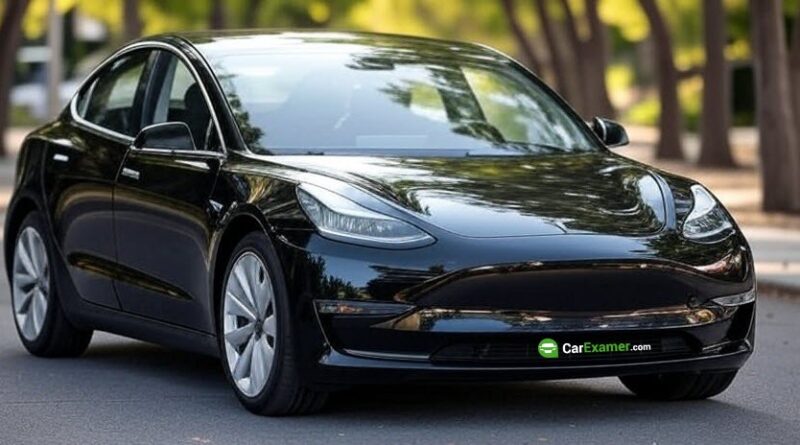
Tesla Model 3 Problems and Used EV Buying Checks
The Tesla Model 3 problems I would investigate on a used car are unexplained charging interruptions, persistent suspension noises, uneven tyre wear and warning messages that the seller cannot account for. I also check the service and repair history, the camera view and the underside around the battery. A short drive and an indicated range figure give useful observations, but I would want those observations to agree with the records. Start with the VIN, registration, build year and exact version before arranging a viewing.
Ask for the latest service records or invoices and check whether the car is a private sale, dealer sale or Tesla Certified Pre-Owned. Find out what cover is included and whether the seller can demonstrate charging. Ask which cables, key cards and accessories come with the car. If you are comparing it with a different electric saloon, my Porsche Taycan buying guide covers the same ownership questions alongside the Porsche-specific checks. If you are considering an older Tesla saloon, my Model S buying guide explains which cars may need CCS upgrades and how I check touchscreen work and air suspension.
Identify the version and verify the equipment
The Model 3 has changed over time. Confirm the original market, model year, drivetrain and equipment. Tesla offers a UK owner’s manual for its newer Model 3 as well as separate documentation for older cars. Use the handbook appropriate to the vehicle and ask the seller to show how to select drive and reverse and operate the indicators and wipers. Layout and equipment can differ between versions. Try them yourself before deciding whether the controls suit you.
Check the fitted wheels and tyre sizes against the car’s documentation. If you are comparing two examples on advertised range, establish which version and wheels the figures describe. Ask if the car has been used as a taxi, hire car or fleet vehicle and check what the paperwork shows. A higher-mileage car with clear repair records may be easier to assess than one that has covered less ground but has gaps in its history. Ask for an insurance quote for the particular car and check any modifications or prior repair history with the insurer.
Check the boot-lid harness recall and cameras
Tesla’s UK boot-lid harness recall page describes a retrofit for affected 2017 to 2020 model-year cars. Movement of the boot lid could wear the harness and affect the rear camera. Check the actual car on Tesla’s VIN recall service and the GOV.UK safety recall checker. Get evidence of work already completed, and follow manufacturer instructions if an applicable safety recall remains open. If the car was imported, ask whether its original market needs an additional check.
Try the boot and see if the reversing view is stable when the car is used normally. Check the other camera views and parking aids where fitted. If the image drops out or warnings remain, record what happened and arrange diagnosis. A failed image can have more than one cause. Check invoices for any bumper or windscreen replacement and ask whether any cameras or other equipment needed checking after the work. A camera that works on a short demonstration is not a guarantee that a prior problem is resolved, so ask for follow-up records if the fault was intermittent.
Demonstrate charging and ask for battery evidence
Look at the visible charge port and cable. Ask the seller to demonstrate connection to a known working AC point, confirm the session starts and show how to stop it and release the cable. If you expect to depend on rapid charging, arrange a DC demonstration where practical. Record the state of charge at the start and whether the charger was behaving normally. Charging power varies with conditions. Repeated interruptions or warnings are more important to me than the peak figure on a single session. My home EV charging guide explains how to compare the car with your supply and tariff.
Ask for any battery assessment and check the date, mileage and VIN. Tesla’s manual describes a Battery Health Test on supported cars and explains that it needs time on a suitable AC charger. Ask someone familiar with the vehicle whether that test or another assessment is suitable. A dashboard range prediction is influenced by factors other than capacity. A brief drive and charge help to assess operation that day, but do not establish usable battery capacity on their own. If a report shows a warning, ask what was investigated, what was repaired and whether the warning returned.
Look underneath for damage and inspect tyre wear
From a safe position, look for dents, damaged covers, broken fasteners and evidence of grounding. Ask for photographs and invoices if there has been a collision or impact underneath. If the surrounding structure or battery enclosure may be damaged, arrange an assessment by a qualified EV workshop with suitable access. Ask what it can examine and whether additional testing is needed. Visible damage and internal battery condition are separate questions. Work on high-voltage components belongs with trained specialists.
Look at the inner shoulders of all four tyres where accessible. Confirm sizes and specification and ask about alignment and wheel repairs if wear differs across the car. On an ordinary insured road test, note repeatable rattles, knocks or vibration and the conditions that produce them. If the steering wheel sits off-centre or the car pulls, have it checked. On a car with braking mostly provided by regeneration in daily use, pay particular attention to disc corrosion and uneven friction-brake response. Ask a workshop to inspect the inner faces and diagnose persistent issues. If a serious brake or steering warning is present, seek an assessment before driving.
Check maintenance, warranty and handover
Tesla’s UK maintenance guidance sets out recommended work on items including brakes, filters and tyres. Use the intervals and guidance that apply to the model and conditions. Check invoices and the GOV.UK MOT history for repeat advisories or a service that did not address the issue you see now. Ask for written quotes for the next work, including tyre sizes, parts, VAT and any diagnostic time. If the seller says work was done, ask for evidence that it addressed the fault.
Tesla’s UK warranty terms give different battery and drive-unit mileage limits for different derivatives and explain capacity cover. Ask Tesla to confirm expiry, mileage, exclusions and what applies to this VIN. Check the cabin heating, demisting, touchscreen, windows and key cards. Confirm who will transfer the vehicle to your Tesla account. Tesla explains the process in its ownership management guidance. Ask the seller to show what they will do at handover so you can check access and service arrangements afterwards.
If the car has been standing, find out when it was last driven or charged and whether the low-voltage battery needed attention. Ask the seller to list which repairs will be completed before collection and how you can verify them. A delayed repair can change when you can use the car. Compare the purchase price plus immediate costs with another Model 3 of the same specification, and use your actual overnight or public charging plan when estimating running costs.
Compare the car against your actual charging routine
Write down the longest regular journey you make and identify when you can plug in. If you charge overnight, estimate how much electricity you need to replace on an average day rather than assuming you will charge from empty. If you mostly use public charging, try a charger you plan to rely on and check access, pricing and likely queues. Compare the cars on the same assumptions. A larger battery may make a difference on some routes, while a cheaper car with a better repair history can make sense for a shorter commute with reliable charging.
I would also check how the car fits your parking space and what you want to put in the boot. Try accessing the rear seats and confirm which charging cables and accessories are included. If you regularly carry bulky items, the dimensions of the boot opening may matter more than a quoted capacity. For a higher seating position, easier loading or towing, my Tesla Model Y buying guide shows what I check on the SUV. Before handover, agree who will remove the old account and when you will be able to set up your own. Check that all supplied key cards work. If the car needs another service visit to resolve a warning, agree how it will be booked and how you can verify that the symptom has gone.
Keep the latest battery and repair records together so you can refer to them later if a warning reappears or you need to speak to Tesla about a warranty claim.
My checklist before buying a Model 3
- Confirm the VIN, build, drivetrain, wheels and equipment.
- Check recalls and ask for written evidence of completed work.
- Demonstrate charging and establish what any battery report measures.
- Inspect tyre wear, braking, suspension noises and the accessible underside.
- Check warranty, transfer arrangements and the cost of work already due.
If you are buying remotely or need better evidence before agreeing a price, a vehicle inspection can record the accessible condition and flag issues that require specialist diagnosis. Arrange charging and workshop access in advance where appropriate. I would choose the Model 3 whose condition and records support how I intend to use it and whose next costs are clear before I pay.