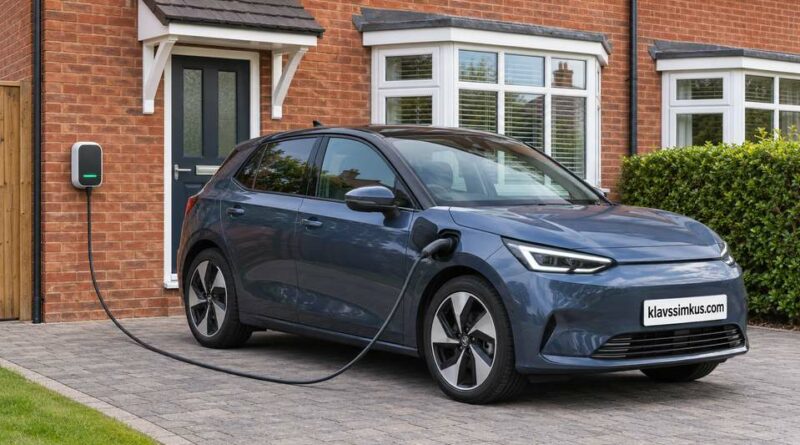
How to Charge an Electric Car at Home in the UK
Charging an electric car at home starts with three questions. Where will the car park? What charging power can it accept? Who can install suitable equipment at the property? I would answer those before buying a used EV or ordering a chargepoint. A car that charges overnight on your drive may be easy to live with. The same car can require a different plan if the only place to park is on a public road or if the socket is on the far side of a shared car park.
As a vehicle inspector, I focus on whether the car accepts a charge, whether its equipment works and whether the buyer’s charging plan matches the car. The electrical installation is a separate job for a qualified chargepoint installer. If you are comparing two cars, check each model’s AC charging specification and the connector position. The larger battery or higher quoted rapid-charging speed will not necessarily give you a faster charge at home.
Work out how much charge you need at home
Start with the miles you drive between charges and a realistic estimate of the car’s efficiency. If an EV averages 3.5 miles per kWh, 70 miles of driving uses about 20 kWh from the battery. That is a worked example. Motorway speeds, winter weather and cabin heating can change the result. The energy recorded at your meter will generally be higher than the energy added to the battery because charging involves losses.
A 7 kW chargepoint could theoretically supply 20 kWh in just under three hours if the car accepts 7 kW throughout. Allow extra time for losses and any limits set by the vehicle, charger or installation. This calculation is more useful if you apply it to your daily mileage. You may only need to replace the energy you used that day. Check whether you can do that inside the hours when your tariff is cheapest, especially if several drivers share one point.
Check the car’s AC charging limit and connector
For a home chargepoint, compare the car’s onboard AC charging limit with the power the installer can provide. Some cars accept less than the wallbox can deliver. Faster AC charging can also require a suitable electricity supply. Ask the installer and check the manufacturer’s information for the exact car. A quoted maximum DC rapid-charging rate on a motorway charger does not determine how fast the car will charge on home AC power.
Check which connector the car needs and whether the charger has an attached cable or uses a separate one. An attached lead can make a daily routine simpler. A socketed point gives you the option to use a different compatible cable. Before choosing the position, check where the lead will run when you park normally. It should comfortably reach the charge port without tension or running where someone is likely to walk or drive over it. If two cars share the space, check both connector positions and ask the installer whether the proposed layout works for both.
Ask for an installation survey and an itemised quote
I would ask a qualified installer to survey the property and confirm the scope in writing. Show them the parking space, electricity meter, consumer unit and possible cable route. They can assess whether your electrical supply and equipment are suitable, where the chargepoint can safely go and what approvals or upgrades are needed. GOV.UK guidance on connecting chargepoints explains how the installer determines whether the local electricity network operator needs to be involved before or after installation.
Compare quotes with the same scope. Ask whether the price includes the chargepoint, a site survey, the actual cable run, any groundwork, required protection and testing. Confirm what the installer will provide at handover, including instructions, electrical certification and warranty details. If the property may need further electrical work, ask for separate prices and lead times before setting a collection date for the car. If you are considering charging from a domestic socket, get advice on the specific vehicle and electrical installation. I would use a professionally installed chargepoint for routine charging and avoid domestic extension leads for EV charging.
Check permission and grant eligibility before booking
If you rent or live in a flat, find out who owns the parking space, building and land along the cable route. My EV charging guide for flats covers shared parking, permissions and how residents pay to use communal chargepoints. Get the required permission from the landlord, freeholder or managing agent and ask who will own and maintain the point. With a shared supply, agree how electricity use will be measured and billed. Check what happens if you move out, stop renting a parking bay or have to change vehicles.
The GOV.UK chargepoint grant for renters or flat owners covers 75% of eligible chargepoint and installation costs up to £500, subject to the scheme’s rules. The 2026 grant guidance sets out which household and landlord schemes are funded until 31 March 2027. Read the current eligibility and application rules before ordering work. If you do not have off-street parking, ask your council about approved options. The November 2026 cross-pavement guidance for England explains how permitted development can apply subject to conditions. The local highway authority can still need to approve work affecting the pavement. A channel does not reserve a public parking space.
Estimate the cost using the rate you actually pay
For a simple comparison, multiply the electricity measured at the meter by the unit rate. If a session draws 24 kWh and your rate is 10p per kWh, that session costs £2.40 before any separate tariff charges. At 25p per kWh, the same energy costs £6. Those are illustrative rates. Use your supplier’s rates, check when they apply and factor in whether the rest of your household use will cost more on the proposed tariff. Keep the installation cost separate when comparing whether a charging arrangement will save you money over time.
Ask whether the tariff works with your car, charger or smart meter before counting on discounted hours. Some tariffs require a supported device or app. Try the first scheduled charge while you can check how it behaves. If both the car and the wallbox have active schedules, check how they interact. Choose which will manage timing based on the equipment and tariff instructions. Keep instructions for starting a one-off charge if you need extra range earlier than expected.
Demonstrate AC charging before buying a used EV
Ask the seller to leave enough room in the battery for a test. Look at the charge port, flap and supplied cable for obvious damage. Ask them to connect the car to a known working AC point and show how the display confirms the session has started. See how it stops and releases the cable. If the car refuses to charge, record messages and ask whether a charge limit or schedule is active. Repeat the demonstration on a known working setup if necessary and have persistent problems diagnosed before agreeing a price. My Kia EV6 buying guide shows how I check AC charging alongside battery, warranty and repair records.
If a property already has a charger
Find the wallbox make, model and serial number and ask for the installation paperwork. Confirm that you can use it with your intended car and tariff and find out whether the previous user’s account can be transferred or reset. Check who controls access if the unit is shared. An installer can assess the condition of the existing installation and identify any work before you rely on it. I would ask for a demonstration, including how you start a charge if the Wi-Fi or app is unavailable, where the manufacturer supports that.
If the installation or property permission will take time, work out how you will charge in the meantime. Check public or workplace charging near the places you already visit, including opening hours, parking restrictions, prices and connector types. Budget for those sessions at the rates you can actually access. Try the route and charger if you are likely to depend on it. This can matter more to the first month of ownership than the theoretical maximum range advertised for the car.
My home charging checklist
- Confirm where you park and who has authority over the space and cable route.
- Check the car’s connector and AC limit, and have a qualified installer assess the property.
- Compare itemised quotes and check any grant conditions before arranging the work.
- Calculate the time and cost of replacing a typical day’s driving using your own mileage and tariff.
- Demonstrate the used car charging and confirm which cable comes with it before paying.
If the car has a charging fault in its history or you are buying at a distance, an independent vehicle inspection can record the accessible condition and identify where EV-specific diagnosis is needed. Arrange access to charging equipment if you want the car’s AC operation demonstrated. A working car, a suitable installation and a tariff that fits the way you drive are the three things I would want in place before relying on home charging.