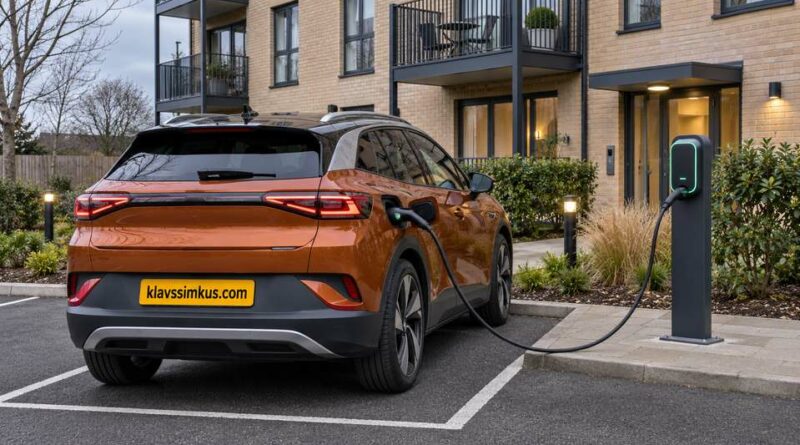
EV Charging for Flats in the UK: Grants and Options
EV charging for flats in the UK depends on where you have a right to park, who controls the land between the car and the building, and how electricity would be paid for. I would establish those details before buying an electric car. A numbered bay in a lease, an unallocated space in a shared car park and a parking permit for the road outside each lead to a different charging plan.
Start by writing down where you actually park overnight and how often you can rely on that space. Then ask the managing agent, landlord or council what is already available or allowed. If a chargepoint will take several months to arrange, work out how you would charge in the meantime. A communal charger or a workplace point could suit your habits, but I would try the arrangement before basing a purchase on it.
With a dedicated bay, start with the paperwork
Find the lease, tenancy agreement or parking licence and check what it gives you the right to use. A space you can usually park in may be different from one allocated to the flat. Ask who owns the bay, the wall or post you would use and any land a cable route would cross. Find out who can give written permission and what plans, electrical information or insurance documents they require. If the route passes through another owner’s property or a common area, ask about that early.
Once there is a practical route to permission, ask a qualified chargepoint installer to look at the actual property. Show them the meter, parking space and any preferred route. Ask whether a connection can be made from your flat’s supply or whether a communal supply and separate billing would be more practical. The installation choice depends on the layout and electrical capacity. A long cable run, groundwork or dealing with common areas can change the quote. Have the installer price the proposal that the building’s authorised decision-maker is prepared to consider.
Check the current grant for flat owners and renters
The national chargepoint grant for renters or flat owners covers 75% of eligible purchase and installation costs, up to £500. The eligibility guidance says the parking space must be private, off-street and clearly defined, available to you at all times, and somewhere you own or have a legal right to use. It also requires evidence of permissions and of an eligible vehicle. Ask the installer about grant eligibility and the application order before approving the work. OZEV’s 2026 grant update gives 31 March 2027 as the end date for the extended home schemes.
If the landlord intends to commission the installation, check the separate residential landlord chargepoint grant. Many residents care as much about what they will pay to charge afterwards as who got a grant. Ask whether the quote and ongoing terms are available in writing. Confirm what will happen if you move, the bay allocation changes or the building switches operators. A grant helps with eligible installation costs. It does not establish that the future charging price will suit your budget.
If you have a shared car park, check how charging would work
For an unallocated residents’ car park, ask the managing agent whether it already provides shared chargepoints or is considering an installation. A single dedicated point may be difficult to justify if you regularly park in a different spot. A shared setup may be more practical if the building can manage capacity, access, payment and complaints. Ask who will use it, whether there will be time limits and how the operator will deal with cars occupying charging bays after a session ends.
I would also ask whether the installer has allowed for future cars and what happens if several vehicles charge at once. A system may share the available power. Knowing what can happen on a busy night is more useful than seeing the headline power printed on the unit. Check whether residents book a slot, pay for a session, get billed per kWh or pay through a service charge. Ask who fixes faults and when they are likely to attend. If existing chargers are often occupied or unreliable, plan a second place to charge. Check the cable reach on the bay you will use and whether the car’s socket position makes access awkward.
If you park on the street, start with the council
Ask the council about local public charging and whether it allows an approved cross-pavement arrangement. In England, the updated GOV.UK cross-pavement guidance describes permitted development rights for eligible setups from 21 October 2026, subject to conditions. There can still be highway authority permissions and installation requirements. Check the route applicable to your address and ask what is allowed before ordering equipment or work. A cable channel also gives you no automatic right to park in front of it. I would avoid trailing charging cables across a public path or using any unauthorised arrangement.
If you are considering the separate households with on-street parking grant, check the current GOV.UK chargepoint grant guidance before you incur expenses. Where a channel cannot work, look at public kerbside chargers, workplace charging or places you already visit. Check parking restrictions, operating hours, session prices and whether charges differ if you leave the car after charging finishes. I would visit at the time I expect to use the point. A charger that is available early in the afternoon may be busy when residents get home.
Compare the weekly cost and inconvenience
List the miles you drive most weeks and work out roughly how much energy you need to replace. Use the car’s realistic efficiency and allow for charging losses and seasonal changes. As an example, a 25 kWh session costs £11.25 at 45p per kWh before any parking, idle or subscription charges. Use the actual rates available at the places you expect to charge. See how they compare with the costs of a shared building point or an individual installation. My UK home EV charging guide explains how I compare charging time and tariffs when home charging is feasible.
Do the same comparison for a busy week. Think about how much time you can reasonably give to a separate charging stop and what will happen if your usual point is unavailable. Check whether you can charge while working or shopping and what controls payment. If you can only rely on one public site, try it before you commit to the car. Find a second site you can use if the first is busy or out of service. An EV that requires a special trip every few days may still suit you, but that is worth knowing while you are comparing cars.
Get the building’s charging terms in writing
Before agreeing to use a building’s point, ask for a copy of the terms residents receive. I would check whether electricity has a separate standing fee or minimum charge, how often the rate changes and how costs are recorded for each person. If a contractor operates the charger, find out who handles refunds, access problems and replacement when the unit breaks. Ask how a new tenant or leaseholder gets access and how the previous resident’s account is closed.
If the solution still needs approval, ask for the next decision date and check whether the quote remains valid until then. Permission to survey the site and permission to install are separate steps. Budget for charging elsewhere until you have an installation date. If the paperwork says charging is planned but there is no committed date, compare cars using the options you can use today.
Confirm the used EV suits the charging points you can access
Ask the seller to demonstrate the car charging. Confirm which cables are included and where the charge port sits. Check the AC charging limit for the exact version if you will rely on a shared or on-street AC point. If it stops charging, record the warning and what equipment was used. Ask a qualified workshop to investigate repeat failures before you agree a price. A short charge demonstrates part of the car’s operation. It takes separate evidence to assess usable battery capacity or health.
- Check your legal right to the bay and get the relevant permissions in writing.
- Confirm who will install the charger, own it, maintain it and bill for the electricity.
- Check the grant rules, quote and lead time before approving any work.
- Try the public or shared points you would use and calculate costs using their real prices.
- Demonstrate charging on the used car and confirm it suits the connector and power available.
If you need help assessing a used EV, a vehicle inspection can document visible condition and highlight where EV-specific diagnostics are needed. Set up access to a suitable charger if you want charging demonstrated. I would buy once I know the car can charge where I plan to use it and I can live with the cost and timing of that routine.