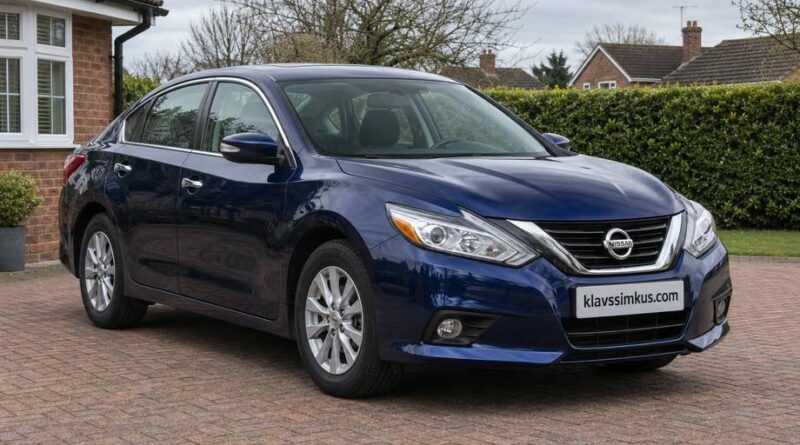
Nissan Altima problems: UK import buying checks
The first thing I would ask for on a used Nissan Altima in Britain is the VIN and the records from where it was sold new. A recent UK registration and a tidy interior cannot explain what happened before import. Start with the model year, recall status, title history and mileage. Then give yourself enough time for a cold start and a road test long enough to see how the transmission behaves warm.
An Altima can suit a buyer who wants a North American saloon and understands the practicalities of owning one here. I would price insurance and check workshop and parts support before deciding whether it fits. A problem that takes a day to solve on a common UK car can take longer if the parts or diagnostic information must come from abroad.
Identify the Altima and get its overseas history
The 2013 to 2018 US model is generally identified as L33. From the next generation, the 2019 US Nissan release describes a 2.5-litre petrol with available AWD and a 2.0-litre VC-Turbo that replaced the earlier V6 in the US range. Check the exact model year and engine against the VIN and build information, because choices varied with trim and market. Nissan’s 2025 US specification is a useful comparison if you are looking at a later 2.5. A year in a UK advert can refer to registration rather than model year.
Match the identifier on the car to the V5C, available overseas title or registration records and repair paperwork. The DVLA’s imported registration guidance explains what it asks for when an imported vehicle is registered. An already registered vehicle can still have gaps in the evidence the seller can show. I would ask for images from any auction, the title history for the original market and a dated record of the mileage when the car arrived in Britain.
Compare those readings in sequence. The GOV.UK MOT history can help you check the British mileage and advisories. It does not tell you what happened abroad before the first UK test. Ask about a replacement display, a change in units or an unexplained drop. A vehicle can show distance in miles and still have an earlier record entered in kilometres. Write down the dates and units and see if the sequence can be reconciled with invoices.
Check current recalls by VIN before the road test
Use the UK recall checker and check a US-market Altima with the NHTSA VIN search. Ask Nissan to confirm completed work and whether any open campaign can be handled in the UK. A North American recall result and a British registration lookup cover different records. If there is a campaign, find out what Nissan says to do and follow the advice before arranging a test drive.
For example, Nissan’s US campaign bulletin for 20V315 concerns the bonnet latch on certain 2013 to 2018 Altimas. Verify the result for your VIN. If the bonnet does not latch as it should or a warning about it remains, do not drive it until the problem has been checked. I would want evidence of the remedy if the seller says an earlier recall has already been dealt with. That evidence should relate to the vehicle in front of you.
Also check the actual rear suspension. A US safety investigation report examined reports of corrosion and separation of rear lower spring links on certain older cars. Treat an investigation and a recall as different records. Look for corrosion or deformation around the applicable components, compare previous MOT notes, and arrange a workshop inspection if anything is doubtful. If a load-bearing component looks severely weakened or has moved out of position, have the car assessed before driving it.
Test the Xtronic CVT properly
A CVT can hold the engine at a more constant speed than a stepped automatic while the car accelerates. Try forward and reverse from a standstill, then park, pull away and drive normally with light throttle. Do the same after the gearbox has warmed. Persistent shudder, a sustained delay selecting drive, pronounced whining under load or loss of drive warrants investigation. Ask when a symptom happens, then describe it in terms a specialist can reproduce. For example, state whether it is only warm and only on a gentle pull-away.
Nissan’s US Altima CVT service bulletin sets out diagnostic steps for judder and particular fault codes, with its own vehicle and transmission scope. A bulletin is a workshop reference. It does not mean all Altimas have the same fault or that work will be covered in Britain. I would want a suitable technician to check the individual car, look at the relevant fault data and identify the cause before I discussed repairs or bought replacement parts.
Check invoices for the fluid specification and the service date and mileage. If the gearbox was changed, ask which unit was installed and who carried out any required programming or setup. If there were past warnings, ask whether they returned. A short, smooth drive when cold is useful but cannot answer a complaint that only appears after the car has been on the road for a while. Leave enough time to repeat the relevant conditions safely.
Check the engine, cooling and AWD if fitted
Arrange to start the engine from cold and check how it settles to idle. Look at accessible areas for oil or coolant leaks and ask about top-ups, past overheating or an engine warning. Check levels according to the handbook and keep the cooling system closed when hot. A persistent rattle, misfire or lack of response under ordinary acceleration needs diagnosis. If the oil-pressure warning stays on with the engine running, stop the engine safely before seeking advice. A 2.5 naturally aspirated engine, an earlier V6 and a VC-Turbo have different parts and service requirements.
On a 2.5 with AWD, confirm the drivetrain and check the tyres against the handbook. Pay attention to any difference in size or wear, and ask about a recent single replacement if the others are well worn. Listen for a vibration that changes with speed or throttle and look for signs of leaks from the driveline in accessible areas. Ask a workshop to pinpoint the source before treating a whine as a transmission problem. Check for brake pull or vibration on a clear, suitable road and take warning lamps or an abnormal pedal seriously.
Look for previous repairs and check UK usability
Walk around the vehicle in daylight and compare panel gaps, paint texture and the condition of visible mounting points. If the car has a recorded impact, compare the damage in the original images with the invoices and finished repair. Ask about proof of any required calibration after glass, camera, grille or bumper work. A good repair should have a clear record of what was checked or replaced. Scratches or uneven paint alone do not establish the condition of the structure. Have damage near a structural joining point assessed properly.
Try both keys, the speed display in mph, all lights, the rear fog lamp, demist, cameras, seat belts and windows. Check the workmanship of any changes for British use and have an MOT tester or suitably qualified workshop assess unfamiliar lighting or tyres. Make sure the driving position works for you if it is left-hand drive. I would try a normal junction and a parking space, with the seller’s agreement, and check that I can reach everyday controls comfortably. Ask about the availability of an instrument cluster, light unit or windscreen before pricing a damaged one.
If you are weighing up a smaller US-market Nissan, my used Nissan Kicks import guide covers the difference between North American CVT models and Japanese e-POWER examples. For either car, tell the insurer the actual specification, import status and known modifications so you can compare cover before agreeing to buy.
If the car was repaired after a serious impact, ask which parts were fitted and whether there is evidence of an alignment check afterwards. Look at the tyres for a pattern of repeated wear and try the steering at parking speed. Check the airbag lamp through its normal start-up sequence and ask for a diagnostic assessment if a warning stays on. A receipt for cosmetic panels does not tell you what happened to the restraints or suspension.
Which used Altima would I buy?
I would choose the car with a clear VIN history, an uneventful warm drive, consistent mileage and a workshop near enough to support it. Get current UK quotes for work that needs doing on the individual car. If parts have to be imported, ask about lead times and whether the garage can source them. That gives you a better idea of the real purchase cost than an estimate based on a different market’s parts and labour.
If the transmission shudders, the history is missing an important period or you cannot tell how a previous repair was carried out, get an independent vehicle inspection before paying. A CVT or body specialist can help with a specific fault that needs further testing. I would leave the deposit until the documents, the condition and the test drive all tell a consistent story.