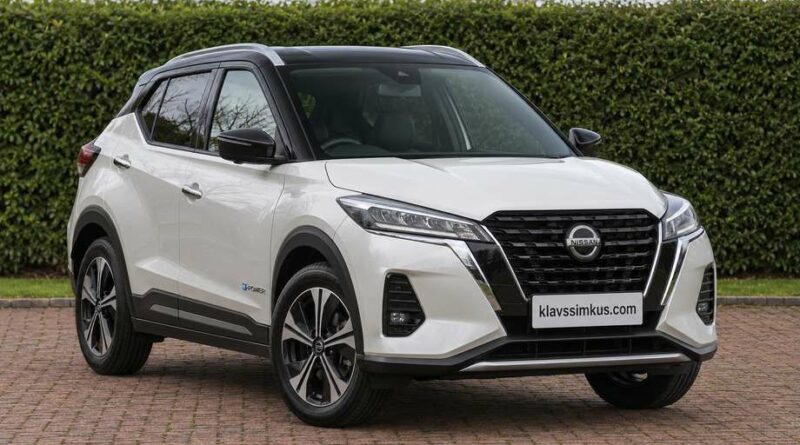
Nissan Kicks problems: UK import buying checks
If I were buying a Nissan Kicks in Britain, I would ask for the original market and model year before making the trip. A North American petrol Kicks and a Japanese Kicks e-POWER can both be described as automatic. The petrol model uses a CVT on the versions covered here. The e-POWER drives its wheels with an electric motor and has a petrol engine to generate electricity. They need different road tests and different workshop support.
I would also ask for the VIN or original chassis identifier, the UK registration and records from before import. On a low-mileage example, I care as much about how the mileage was recorded and whether previous damage has been properly repaired as I do about the number on the display. Check that you can insure the actual vehicle and find somebody able to service it before leaving a deposit.
Identify which Nissan Kicks is in the advert
Nissan’s 2024 US Kicks press kit lists a front-wheel-drive 1.6-litre petrol with a CVT. The new US 2025 model uses a 2.0-litre engine and Xtronic CVT, with all-wheel drive available. The year on a UK plate may not tell you the manufacturer’s model year. Ask for evidence showing the engine, transmission and driven wheels before sourcing parts or comparing workshop prices. Badges and option descriptions can differ from one market to another.
Nissan launched the Kicks e-POWER in Japan in 2020 and announced a second-generation e-POWER system and AWD option for Japan in 2022. Check the identifier and build details to establish whether it has that system. There is no plug-in charging session to demonstrate. If you are comparing it with a smaller model using a similar principle, my used Nissan Note buying guide covers Japanese Note e-POWER and the older UK Note separately.
Check VIN, recalls and pre-import records
Compare the identifier visible on the vehicle with the UK V5C and available overseas documents. DVLA’s registration guidance explains the evidence it asks for when an imported car is registered. On a Japanese example I would want export or deregistration records, a translation and auction or service records that can be traced to the chassis. For a North American car, ask for the title history and any auction images or repair invoices. Check that the dates, body details and identification match the vehicle you are viewing.
Use the GOV.UK recall checker for the UK registration and verify the originating market separately. The NHTSA recall tool lets you check a US-market VIN for open campaigns. For example, US campaign 26V331 concerns the instrument screen going blank on certain 2025 and 2026 Kicks vehicles. Confirm what applies to the individual vehicle and ask Nissan who can fulfil any required remedy in the UK. A fresh MOT does not verify that an overseas recall has been completed. Follow Nissan’s advice if a campaign is open or key information disappears from the instrument display.
Write the distance readings down in order, including whether each is in miles or kilometres. If the seller says the speedo was converted, ask whether the total distance display also changed and request the installer’s invoice. For example, 80,000 kilometres is about 49,710 miles. A raw drop in the number can make sense if the unit changed, but I would want records to explain it. The UK MOT history helps with the part of the timeline after arrival. Gaps before the first British test still need separate evidence.
I would keep the import evidence together and note the source of each document. An auction grade or translated remark is useful when it belongs to the car and describes the date it was inspected. It does not establish what was repaired later. Check any claim of a clean title, low mileage or dealership history against documents you can trace. If the seller cannot provide something, ask what the importer retained before treating the history as complete.
Test a petrol CVT from cold and warm
Ask the seller to leave the engine cold. Listen to it start and settle, look for warning lamps and ask about leaks or frequent fluid top-ups. With the car stationary and in a suitable place, try forward and reverse. During normal driving a CVT may hold the engine at a steady speed while road speed builds. A long or repeated delay before moving, heavy shudder, fading drive or a pronounced whine under load are reasons for specialist diagnosis. Repeat the same low-speed manoeuvres warm where it is safe to do so.
Ask for dated transmission invoices, with the fluid specification and work recorded. A receipt that just says automatic transmission fluid does not establish it was the right product. If the seller says the gearbox was replaced or repaired, ask why and see whether the fault can still be reproduced. Check the exact unit from the vehicle information, since an early 1.6 and a newer 2.0 with AWD should be assessed using the correct manuals and parts. An unusual feel under acceleration can also come from a different part of the driveline, so wait for diagnosis before assigning a repair cost.
Check e-POWER as an electrified drivetrain
On an e-POWER car, look for a normal ready indication, then notice how it moves away, slows down and restarts after a drive. The petrol engine can start while the car is stationary or vary its speed independently of road speed. That can be normal for this design. Repeatable judder, an apparent loss of power or a persistent warning are reasons to have the system checked. Ask for service records for the petrol engine as well as any diagnostic report or warranty evidence relating to the high-voltage system.
If you want evidence about the battery, ask a specialist which tools support that exact Kicks and what its assessment measures. Match the date, mileage and chassis to the report. A picture of the dashboard’s energy flow does not tell you the battery’s remaining capacity. If there is evidence of collision damage near high-voltage components or their protection, leave that assessment to an appropriately qualified workshop. Ask about domestic parts availability before agreeing to take on a diagnosed fault, especially if an inverter or other vehicle-specific component may be involved.
Check previous repairs, tyres and everyday equipment
Look closely at panel fit, paint texture and accessible seams. Compare what you can see with any previous auction images and invoices. A repaired bumper can be a minor matter. Distorted mounting points, irregular shut lines across several panels or evidence of poor welding deserve a deeper assessment. Look for corrosion underneath around exposed mounts, sills and floor edges without going beneath a car supported only by a jack. Ask for a lift inspection if the damage or rust is difficult to see. Fresh underseal is more reassuring with photographs showing the condition beforehand.
Check tyre condition, the inner shoulders where visible and whether their size and ratings match the car. Ask a tyre specialist to check approval where an import’s fitted tyres are unfamiliar. On an AWD model, check the handbook requirements for matching tyres. During a normal drive, pay attention to pulling, vibration or repeated knocks. A tyre, worn suspension joint or body repair can contribute to an alignment problem, so get a diagnosis rather than pricing an alignment as though it will necessarily fix the wear.
Check that the speed display is clear in mph, and try the locks, both keys, lighting, demisting, fan, cameras and audio. If the car has left-hand drive, see how it suits the roads and parking spaces you use. Ask about any work to lights, displays or wiring for UK use. If cameras or sensors are fitted and there was a relevant repair, ask whether calibration was required and get evidence. Try the equipment after a restart if anything is intermittent. I would also check the amount of time and money a replacement lamp, key or piece of glass might take before assuming I can buy it locally.
Before leaving, check the practical details. Try the rear doors and boot in a normal parking space. If there is no spare wheel, check what inflation equipment is supplied and what the handbook recommends. Ask whether a handbook for the imported model is available in a language you can use.
Which imported Kicks would I buy?
I would choose the car with evidence of its history, a drivetrain I have tested properly and a workshop that can support it. I would consider the US-market petrol if I was comfortable with its layout and could confirm recall and parts support. For the Japanese e-POWER I would want a coherent mileage history and access to suitable hybrid diagnostics. It makes sense to compare insurance and realistic ownership costs based on the actual example, including imported parts that might take longer to arrive.
If the seller cannot explain a repeated warning or a significant repair, an independent vehicle inspection can help before you agree a price. Ask a gearbox or hybrid specialist to check anything that needs more than a general inspection. I would wait for a car with better evidence rather than buy an attractive import and try to reconstruct its history afterwards.
If you are comparing North American Nissan imports and would prefer a saloon, my used Nissan Altima import guide covers its recall history, CVT and UK parts checks.
If you want a compact Nissan with UK-market parts and service support, my used Nissan Juke buying guide compares the petrol, diesel and hybrid versions sold here.