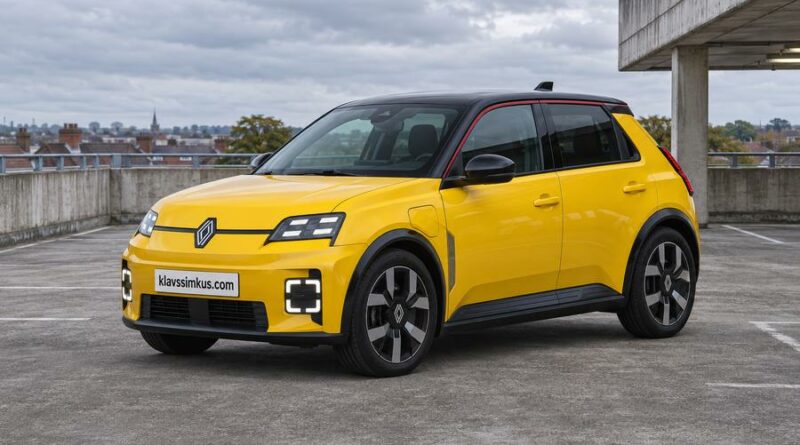
Renault Models in the UK and Which One to Buy
If you’re choosing between Renault models in the UK, start with the journeys you make every week and the space you can actually use. I’d compare a Clio and a Captur if I wanted a compact car and had no regular charging. If I could plug in at home, I’d add a Renault 5 to that shortlist. For a bigger boot I’d try the Renault 4, Symbioz or Scenic with my usual luggage before paying extra for size or a higher trim.
This Renault UK model range guide covers everyday passenger cars, newer electric models, family hybrids, people carriers and the key van ranges. It also explains what I’d check on an older used model that is no longer listed alongside Renault’s current passenger cars.
Compare Renault models and UK starting prices
The figures below are the starting prices advertised on the Renault UK range page when checked on 22 November 2026. The Twingo figure also comes from Renault’s launch announcement and is conditional on the stated grant. A dealer quote can differ by model year, stock, trim, paint and offer. Ask for the exact cash price for the car you can order and whether it includes a grant. For an older used car, compare history, mileage and work due separately.
| Renault model | What I’d compare it for | UK advertised starting price |
|---|---|---|
| Twingo E-Tech electric | Four-seat city car, announced for 2027 orders | £14,745 including advertised grant |
| Clio | Small hatchback for everyday driving | £20,995 |
| Renault 5 E-Tech electric | Compact electric hatchback | £21,495 |
| Captur | Compact SUV with a flexible cabin | £22,595 |
| Renault 4 E-Tech electric | Small EV with more room for luggage | £23,645 |
| Symbioz | Five-seat family crossover | £27,795 |
| Megane E-Tech electric | Electric hatchback for mixed journeys | £28,445 |
| Scenic E-Tech electric | Family EV for longer journeys and loads | £33,245 |
| Austral | Larger full hybrid SUV | £35,695 |
| Rafale full hybrid | Coupé-style family SUV | £38,495 |
| Trafic Passenger | Passenger transport with more seats | £45,385 |
If a retailer shows a different price, ask it to identify the powertrain, trim and model year and to say what conditions affect the figure. The entry price for an SUV can refer to a petrol or mild hybrid even when Renault’s photos show a full hybrid. Get written prices for both if you’re deciding between the two. If an EV price depends on a grant, check the current GOV.UK eligibility list and have the retailer confirm the exact version and final price.
Twingo, Renault 5 and Clio for town and commuting
Renault announced the new Twingo E-Tech electric’s starting price on 20 November 2026, at £14,745 including the advertised £3,750 Electric Car Grant. Renault’s UK launch news says general orders are expected in the first quarter of 2027. This four-seat city car has individually sliding rear seats. I’d check how space changes when you slide them, and whether your longest regular journey suits the battery and charging options.
The Renault 5 is another compact electric choice. Check which battery and trim you are looking at and how you could charge on your usual routes. The Clio is the one I’d try alongside it if regular charging was awkward or I wanted to compare a petrol manual with a full hybrid. Renault lists the next-generation Clio separately, with a UK launch in 2027. For older cars, my Renault Clio buying guide covers Mk4 and Mk5, including the different EDC, CVT and E-Tech transmissions. Buyers weighing up a larger used hatchback, estate or EV can compare those options in my used Renault Mégane buying guide.
Captur, Symbioz, Austral and Rafale for family use
A Captur is a sensible starting point if you want a higher driving position without moving straight to a larger SUV. Try the sliding rear bench where fitted and check the boot with the rear seats set where your passengers need them. On used cars, read the advert carefully if it says E-Tech 160. Some earlier cars were plug-in hybrids, while Renault uses the same power number for a later full hybrid. My Renault Captur buying guide explains the difference and how I’d check charging on the plug-in.
The Symbioz is worth comparing if the Captur’s space is tight. Try the bench and load area with the equipment you carry, and drive the mild hybrid manual and full hybrid automatic in similar conditions if both are in budget. My Renault Symbioz buying guide covers those options and checks on the screen, cameras and roof. The larger Austral brings another full hybrid system and a different range of equipment. My Renault Austral buying guide covers E-Tech 200, VIN checks and 4Control where fitted.
The Rafale has a more sloping roofline. Try sitting in the back and standing under the tailgate if you expect to load it regularly. Renault lists full hybrid and plug-in hybrid versions separately. If you want the plug-in, compare charging access and the exact specification and price with those of the full hybrid first. If you are looking at an older used Arkana, judge its rear headroom, equipment and drivetrain using the documents and the car itself. The current UK model list gives better guidance on what Renault is offering new.
Renault 4, Megane and Scenic for more space in an EV
The Renault 4 is worth trying if you like the idea of a compact EV but need a different boot and rear-seat layout from the Renault 5. Put both in your usual parking space if you can. Move up to the Megane or Scenic if you need more room, different seats or the longer-range options. Renault’s electric range guide lists comparative WLTP figures. Use the number for the exact battery and version and allow for motorway speeds, temperature and the load you carry.
On a used EV, check the battery and charging hardware and ask for the history and available battery condition evidence. Get the seller to demonstrate charging with compatible equipment. Ask what remaining vehicle and battery cover applies by VIN. Inspect the charge cable and socket, and get specialist advice on any warning or evidence of impact near the battery enclosure. If you usually park on the street, look at the tariffs and reliability of the public chargers you would use. The Renault 5 Turbo 3E is listed separately and should be considered on its own specification and availability.
Renault Kangoo, Trafic and Master for work or passengers
Renault’s commercial range includes Kangoo, Trafic and Master. I’d start by measuring the longest item you need to carry and looking at door access. Compare payload and gross vehicle weight for the exact build, and allow for equipment and any conversion. Check which seats and restraints are fitted if you’re considering a passenger vehicle. A Trafic Passenger or an older Kangoo passenger model should be assessed on its own seating and loading arrangements.
Renault’s MY27 van announcement quotes starting prices of £21,800 plus VAT for Kangoo, £30,800 plus VAT for Trafic and £43,250 plus VAT for Master. Those are commercial range figures on the basis stated in that announcement. Ask a dealer for the exact quote with VAT, grant eligibility where relevant and the required specification. For a used van, ask how it was loaded, check the cargo floor, seals, door runners and underside, and verify any equipment fitted to the load area. For signs to look for on that particular van, see my used Renault Trafic buying guide.
Compare driving the same route in petrol, hybrid and electric cars
When someone is deciding between these powertrains, I’d pick a route that includes their usual town speeds, a stretch of faster road and a place they regularly park. Bring your normal load if the retailer permits it. For the hybrid, notice how it responds as the petrol engine starts and whether the gearbox feels predictable. For the EV, plan where you would charge after the longest normal trip and check the cost at that specific location. For petrol, get a quote on the exact car, then calculate the likely fuel and maintenance costs for your annual mileage. If you only need a bigger car for a couple of journeys a year, check how the smaller choice copes on those days too.
Work out the real cost of the car you’re buying
Compare the cash price, servicing, tyres and fuel or charging costs for your own mileage. For finance, compare the deposit, term, total payable, final payment where applicable and any mileage or return conditions. If you need both a work vehicle and a family car, estimate how often you actually need extra seats or cargo space. Test the relevant layout before ordering. If you tow, verify the limits by vehicle and trim and check the intended trailer and loading together.
For used vehicles, check the MOT history, Renault recall guidance and dated invoices. Ask what the warranty covers by VIN, how much remains and whether any work is due. If you’ve found a car that suits your shortlist and its condition needs a closer look, arrange a vehicle inspection before paying. I’d use those findings to decide what the individual car is worth to me.
- Shortlist by your real journeys, charging access, seats and luggage.
- Test each vehicle in the configuration you’ll use.
- Get prices in writing for the exact trim, powertrain and model year.
- On used cars, verify maintenance, tyres, campaigns and all included keys or cables.
- On vans, compare the same VAT basis, payload and conversion details.