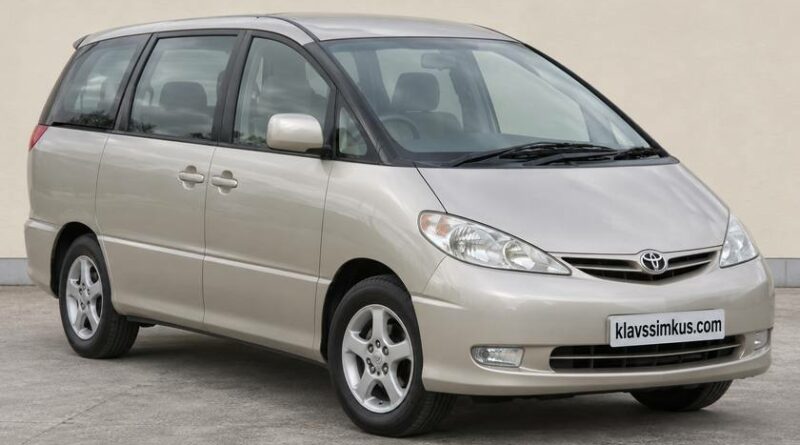
Toyota Previa Problems and Estima Buying Guide
On a used Toyota Previa, I start with the underside and the cooling history. On a Japanese Estima import, I put the original paperwork on that list as well. Both can be practical family cars, but a cheap example can need welding, a cooling repair or hard-to-source door parts before it is ready for daily use. I want to know which vehicle I am looking at and what its condition will cost me before paying a deposit.
Identify the UK Previa or Japanese Estima
Toyota’s UK archive separates the 1990 to 2000 Previa from the second generation sold from 2000 to 2006. The original put its 2.4-litre petrol engine under the floor. The later UK model moved to a front-engine, front-wheel-drive layout. The 2003 UK range announcement covers the 2.4 petrol and 2.0 D-4D diesel, as well as the seven- and eight-seat configurations. Those differences matter for servicing, engine access and how you assess the gearbox.
Estima is the Japanese-market name. If you are also considering an MPV from a different market, my Toyota Innova import guide explains the diesel Crysta and the newer HyCross and Zenix. Later Estimas offered petrol and hybrid versions, with different transmissions and drivetrains. The date of first British registration can be considerably later than the build date. I use the chassis or model code, engine details and original documents to confirm the variant. Get that information before pricing parts or applying a maintenance schedule. If you are comparing larger MPVs, my Toyota Sienna import buying guide covers a separate North American model.
Structural corrosion and the underside
I put a lift inspection high on the list, especially for either early generation. Look at sills, jacking points, floors, suspension mounts, subframes and brake pipes. Pay attention to old welds and coatings that hide the condition of the metal. A thin layer of surface corrosion calls for a different response from damaged or weakened structure. Ask someone who can assess the affected metal and price the full job if the extent is uncertain. Never get under a car supported only by a jack.
Before travelling, I read the GOV.UK MOT history and follow recurring advisories across several tests. Check which parts were mentioned and look for repair invoices after a failure. A fresh MOT provides a dated result. I still want to see the condition of the area if the same corrosion advisory has appeared repeatedly. On an imported car, the British test history only covers part of its life.
Check tyres across the full tread and look for splits, impact damage and differences between axle pairs. I inspect the visible brake pipes and discs and listen for knocks on a suitable road. When the car pulls or vibrates under ordinary braking, I would ask a garage to identify the cause. With older vehicles, seized fixings and parts availability can alter the price even on a straightforward brake or suspension job.
Coolant loss, overheating and timing-drive records
I ask the seller to leave the engine cold. Check accessible coolant and oil levels according to the handbook and keep any hot cap closed. Look for staining around the radiator, accessible hoses and the underside. On the original mid-engined model, a good look at the whole cooling system matters because the engine is under the floor. Ask about any recent top-ups, overheating or radiator work. Also check that the cabin heater works consistently once the engine is warm.
Recurrent coolant loss has more than one possible cause. I would ask a workshop to trace the leak and test the system if the evidence points beyond an external loss. If the car has overheated, get the findings before agreeing to a head gasket repair or accepting the seller’s explanation. Persistent white exhaust vapour after warming, poor running and a falling level are clues to take together when asking a technician what to test.
Check the maintenance requirements against the actual engine code. The timing drive and service schedule vary by version. I look for dated invoices showing the associated parts and mileage if the work is due or has been claimed. For an older D-4D, identify which emissions equipment is fitted before attributing reduced power or an emissions result to a DPF. Ask for the warning messages and measured findings, especially if there has been previous work on the injectors, turbo or EGR system.
Gearbox and Estima hybrid checks
On a manual, I check clutch engagement, gear selection and the feel of the pedal once warm. If revs rise without a corresponding increase in road speed under normal acceleration in gear, I look further for clutch slip. On a conventional automatic, check that drive and reverse engage consistently and that changes feel controlled at light and moderate load. For a petrol CVT or a hybrid transmission, identify the system first. Vehicle speed, engine speed and the exact conditions of a repeated symptom give the workshop a better starting point than the description “slips when driving”.
For an Estima Hybrid, check that it goes into READY from cold and pulls away smoothly. A weak 12-volt battery can cause start-up trouble. The high-voltage traction battery needs separate testing if there are warnings or erratic operation. I ask for the diagnostic report and the invoice for any battery repair, including the type of replacement and any transferable cover. I would also check whether a local workshop can read the relevant imported Toyota systems and source the correct parts before taking the car on.
Sliding doors, rear climate and previous repairs
Try each sliding door using its normal controls, keeping people clear of the opening. Check whether it completes the full travel and latches evenly. On a powered door, look for slowing, repeated reversal or noise. Inspect the rollers and tracks and look at gaps around the openings. A fault could involve the door hardware, alignment or electrical controls. I want to know what the garage has identified before agreeing to buy a motor or cable assembly.
Run the front and rear climate controls and check airflow where passengers sit. Try the windows, locks, keys and tailgate. Lift accessible mats and the boot floor to check for damp, and look at the seat mechanisms, belts and head restraints in every row. If seats were removed, replaced or adapted, compare the fitted layout with the record and look for paperwork for the work. Try your actual luggage and check that your passenger restraints suit the layout in line with the handbook.
Estima mileage and import documents
I prefer to see the original Japanese documents and an explanation of any conversion before comparing mileage. Keep the original kilometre or mile units beside each dated entry. On another Japanese-market Toyota MPV I inspected, the translated export paperwork, displayed mileage and diagnostic data gave different readings. That was a reason to request the original records and investigate how the figures were recorded. A control module reading needs context, including its units and whether the module or display has been changed.
Match the chassis number to the vehicle and V5C, then reconcile overseas and UK dates and readings. Ask who did any speedometer or lighting conversion and look for tidy wiring and supporting invoices. Use Toyota UK’s recall checker for vehicles it recognises, and ask Toyota in the original market about an imported car. If registration is pending, use GOV.UK’s import guidance to establish what is required for that vehicle.
Repair costs and what I would buy
I obtain quotes against the registration or chassis number, with each diagnosis and repair itemised. With older MPVs, the cost needs to include access, labour and the availability of the exact part. Include VAT and fitting where applicable. On an Estima, ask whether the specialist can get lamps, door mechanisms, glass and electronic components for the build you are buying. Find out which work can be done locally and which may mean extra time off the road.
- Corrosion. Get photos and a repair estimate that describes the area, depth and structure affected.
- Cooling. Ask which test identified the loss or overheating and what parts the quote includes.
- Doors and cabin equipment. Test every function you rely on. Price diagnosis and parts separately if the problem is intermittent.
- Hybrid or gearbox fault. Obtain the diagnostic findings for the actual system and confirm the workshop can do the job before negotiating.
Pay particular attention if the van has been converted for camping. If you are also considering a van-based conversion, my Toyota Hiace buying guide covers payload, chassis and diesel checks. I check how any furniture is secured, what it covers and whether the vehicle can still be serviced easily. Ask who fitted auxiliary wiring, how it is protected and what paperwork came with the work. Check the load capacity for the people and equipment you plan to carry. If the conversion hides structural areas or the original seating has changed, get those details checked before deciding how much the conversion adds to the value.
I would choose the Previa or Estima with the stronger structure and clearer history. Do the checks from cold, use the seats and doors, and give yourself time to get underneath safely. If you cannot view the car properly yourself, an independent vehicle inspection can give you evidence to work from before committing.