10 Used Car Problems to Check Before Buying
Estimated reading time: 4 minutes
The used car problems I look for first are faults that affect safety or could change the purchase cost substantially. A warning light, a vibration or a gap in the paperwork gives me a question to investigate. I record what I can actually see or reproduce, then ask what evidence is available before deciding whether to buy, negotiate or leave the car.
1. Rough running, leaks or smoke
Ask whether you can see a cold start. Observe how quickly the engine starts, whether the idle settles and whether an unusual noise persists. Look for accessible signs of leaks without touching hot parts. Persistent smoke or a strong smell deserves investigation. Exhaust appearance can depend on conditions, so record when it occurs and ask a workshop to establish the cause.
If the seller says a part was recently fitted, check whether the invoice describes the original complaint and the work done. A rough idle can have several causes. The invoice and the current behaviour help you decide whether the problem was resolved. For a petrol misfire, see my ignition coil guide.
2. Difficult gear selection or inconsistent engagement
On a permitted and insured drive, check normal gear selection and engagement. Note whether any delay, judder or sound occurs from cold, after warming or when moving off. My used Ford Focus guide explains how I identify and assess different gearboxes. Report the circumstances rather than putting a price on a gearbox replacement based on a short drive.
For a manual, pay attention to clutch operation as well as the gear lever. For an automatic, check the records for any scheduled transmission work that applies to that model. If there is an unresolved complaint, obtain a diagnosis before deciding what a discount would need to cover.
3. Dashboard warnings or recently cleared codes
Check how warning lights behave during starting and afterwards, using the handbook where needed. Read any message as displayed. Ask what led to it, whether it has returned and how previous work was verified. A stored code can direct testing, but its wording alone does not tell you which part to buy. See my engine management guide.
If a warning indicates that the vehicle should stop or needs immediate attention, follow the manufacturer’s instructions and end the test safely. If the seller offers a screenshot from a scanner, ask what was tested and which systems were covered. Keep the screenshot alongside the actual findings and any invoice.
4. Corrosion or evidence of previous body repairs
Look in good daylight at visible sill areas, wheel arches, door edges and panel gaps. Compare the paint finish across nearby panels and ask for photographs or invoices if repairs are disclosed. A colour difference can justify a closer look. The quality and location of the repair matter when assessing its effect on the car.
For suspected structural corrosion or impact damage, arrange assessment with appropriate access. Never crawl underneath a car supported only by a jack. Ask which areas could be examined and which remain concealed. The importance of corrosion depends on what it affects. DVSA structural corrosion guidance.
5. Slow starting or a history of jump starts
Slow cranking can justify a battery and starting system check. Ask how often the car is used, whether it has stood for a long period and whether the problem recurs after charging. Battery age gives useful context. A suitable test can help distinguish battery condition from a charging issue, poor connection or another cause.
A seller may have started the car before you arrive. Ask when it was last driven and whether you can return to see it from cold if starting is a concern. For a hybrid or electric car, establish which battery is being discussed. A check of the conventional low voltage battery answers a different question from an assessment of the traction battery.
6. Worn, damaged or mismatched tyres
Check each tyre for accessible cuts, bulges and uneven wear, and compare the sizes and specifications with those approved for the vehicle. On cars, the legal minimum is 1.6 mm across the central three quarters of the tread around the entire circumference. Look at the inner edges where possible. See my tyre tread depth guide and GOV.UK roadworthiness guidance.
Uneven wear can point to a pressure, steering, alignment or suspension concern. Record which tyre is affected and ask for the underlying cause to be checked before budgeting for replacements. Confirm what spare wheel or repair kit is supplied if you will rely on it after collection.
7. Brake noise, vibration or an unusual pedal feel
Pay attention to brake response during normal driving where safe. If there is a serious warning, significant loss of braking or a suspected fluid leak, leave the car parked and arrange assessment. A look through the wheel cannot establish the condition of every part. Ask the workshop to check the relevant components before agreeing what needs replacing.
Look at the MOT history for brake advisories or failures and compare them with invoices. Check whether the work described addresses the same issue. If a seller says a noise is normal after storage, ask how that was established. Persistent symptoms need further assessment before purchase.
8. Knocks or changes in steering and suspension
Listen for knocks in normal driving and note when they occur. Check whether the car tracks consistently and whether there is an unexplained vibration. A noise over an uneven road can come from several areas, including something loose in the cabin or luggage compartment. Report the conditions so a technician has a useful starting point.
If you see unusual tyre wear alongside a steering concern, ask for those findings to be considered together. If a pothole impact is disclosed, ask which wheel was affected and what was checked afterwards. A road test can identify symptoms. Suitable lifting equipment may be needed to assess the parts involved.
9. Weak air conditioning or damp inside
Test the heating, air conditioning and demisting using the fitted controls. Check whether airflow changes with the selected settings and whether the temperature responds. If the seller says it only needs refrigerant, ask what diagnosis supports that claim. A quote to recharge a system covers different work from finding and repairing a fault.
Look under removable mats where accessible. Recurring misting, wet carpet or a musty smell gives you a reason to ask about leaks or recent cleaning. If the seller says the car was just valeted, ask whether the moisture returns after rain. See my car interior guide.
10. Gaps in servicing or inconsistent mileage
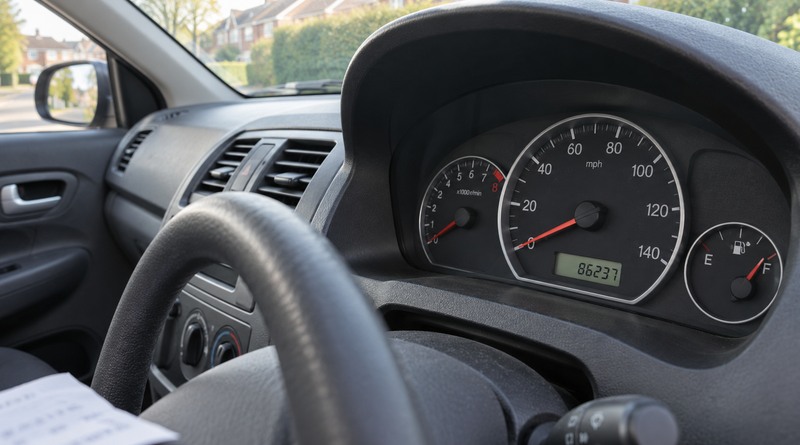
Compare the odometer, invoices and MOT history. Ask what was due under the schedule for the exact vehicle and whether there is evidence that it was completed. A missing record leaves uncertainty. If the seller says the history is digital, ask for a printout or other evidence identifying the vehicle and work. GOV.UK MOT history service.
Ask for the registration before travelling and check the identity of the car against the documents at the viewing. Follow up inconsistent mileage, missing records and outstanding recalls. A recent MOT can be useful evidence about a test. It cannot tell you whether every scheduled service took place. GOV.UK used vehicle checks.
Record the evidence during the viewing
I use a short set of notes so that a seller’s explanation does not get confused with what I saw. If a test could not be carried out, write that down. You can then judge whether the unanswered question matters enough to arrange another visit or a workshop assessment.
- Record the registration, mileage and conditions at the viewing.
- Write down the exact wording of any warning message.
- Note when a noise, vibration or hesitation occurs.
- Ask for the invoice or test result supporting any repair claim.
- Agree who will confirm that any promised work is complete before collection.
For example, if the car pulls and one tyre has uneven wear, ask for the tyre and steering concern to be assessed together. A replacement tyre changes what you can see, but the cause of the earlier wear may still matter. Check what the seller intends to do and ask what evidence will be available afterwards.
When comparing two cars, use the same checks and allow for work that is already due. Keep any unresolved concern visible in your notes until the supporting evidence is available.
Decide what to do with the findings
List safety concerns, confirmed work and anything that still needs diagnosis. Ask for written estimates where a known repair affects the price. If a fault could change the decision materially, establish the cause before committing. A promise to repair something later is easier to evaluate when the work, timing and evidence of completion are agreed in writing.
A vehicle inspection can help assess accessible condition. Confirm the scope if you need deeper diagnostics, lifting or a separate battery assessment. Use my used car buying checklist to combine the findings with the wider checks on identity, history and the purchase.